 Burn
Get Burn
Burn
Get Burn
Burn
Get Burn
Burn
Get Burn
HOME / FASTING / DRY FASTING
A dry fast means no food and no water. That single difference from a water fast changes the risk profile, the practical limits, and what the evidence can tell you.
This section explains what a dry fast is, what happens during one, what the research supports, and how the practice differs from fasting with water.
The definition
ABSOLUTE DRY FAST
Nothing taken by mouth and no contact with water, including showering, bathing or brushing teeth. This is the stricter of the two forms described in dry fasting practice.
SOFT DRY FAST
No food and no fluids taken by mouth, but external water contact is allowed. Washing and showering continue as normal.
THE DISTINCTION
A water fast permits water, salt, black coffee and plain tea throughout. A dry fast permits none of them, which is the whole of the difference between the two practices.
What changes
During any fast the metabolic sequence proceeds on elapsed time. During a dry fast, fluid loss proceeds at the same time and is not replaced.
The body loses water through breathing, through the skin, and in urine, throughout the day and while asleep. In a dry fast none of that is replaced.
Excreting waste requires fluid. Reduced intake concentrates urine, and sustained dehydration affects kidney function directly.
Lower insulin tells the kidneys to release sodium and water, so the early hours of any fast shed fluid. A water fast replaces it; a dry fast does not.
Sweating in warm weather or during exercise adds to the loss. The same fast length is a different proposition in July than in January.
By length
Dry fasting is practiced at much shorter lengths than water fasting, and the widely observed forms are measured in hours rather than days.
12-16h
DAWN TO SUNSET
The daylight-hours pattern observed during Ramadan, and the most widely practiced form.
24h
ONE FULL DAY
A full day without food or water, including a night's fluid loss while asleep.
72h
MEDICAL TERRITORY
Three days without fluid intake, and what the medical literature says about dehydration at that scale.
Weight
WHAT THE SCALE SHOWS
Why the reading drops faster than on a water fast, and what returns when you drink.

Using Burn
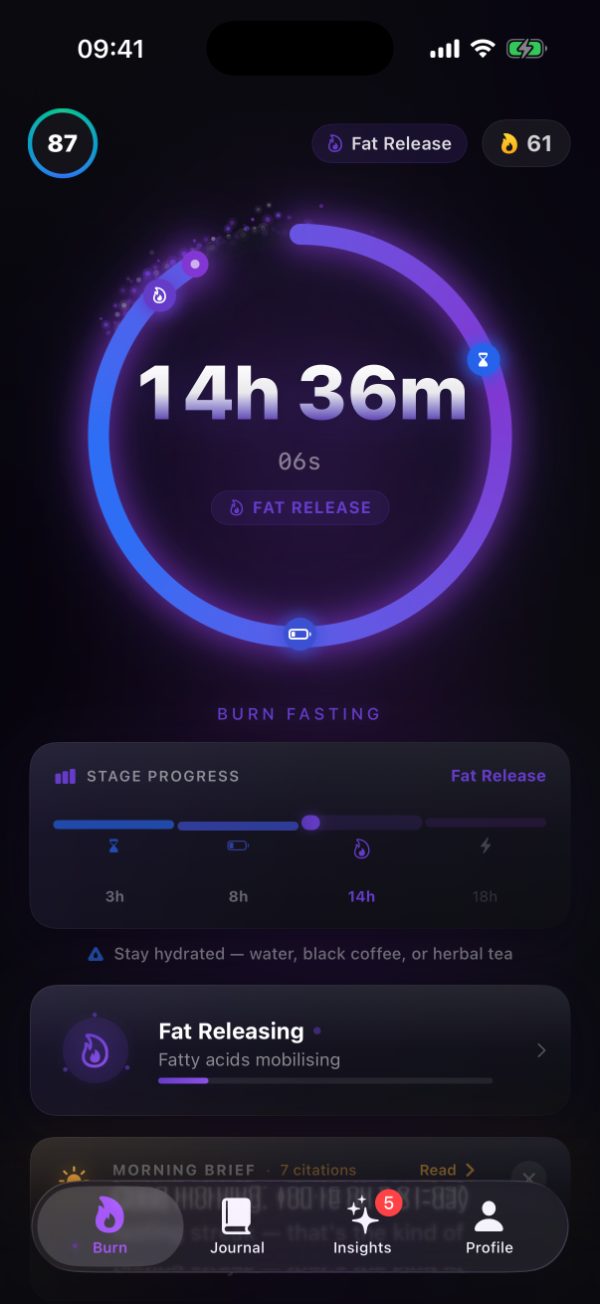
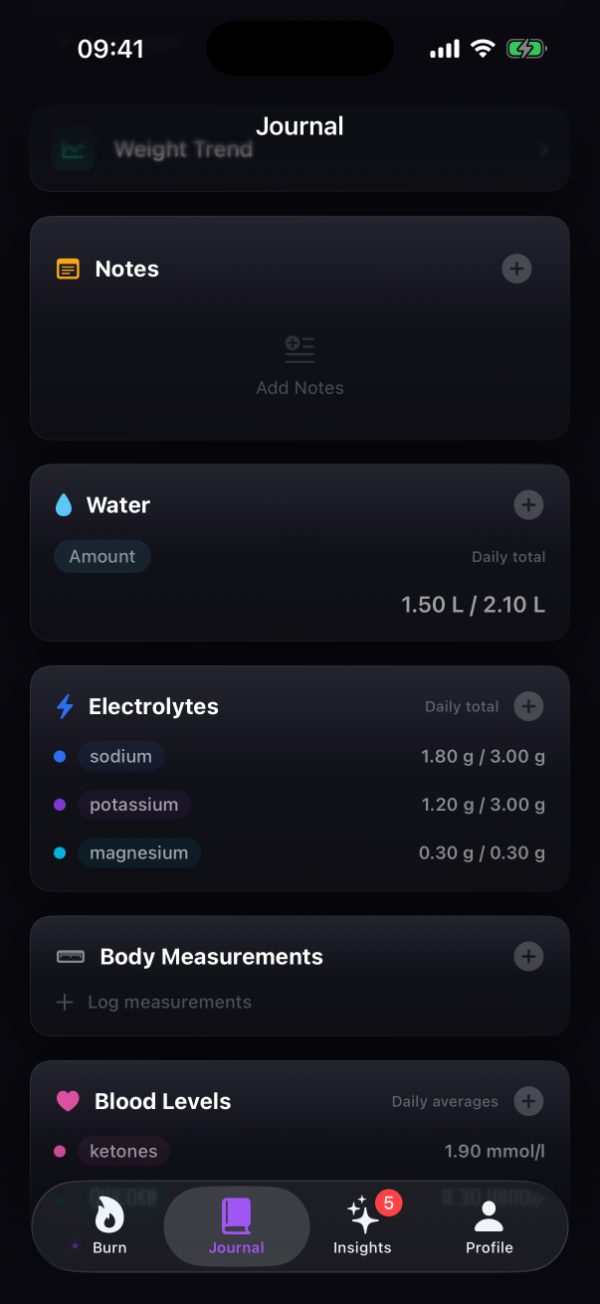
Burn maps elapsed time to nine named stages. That mapping runs on hours, so it is the same whether or not you are drinking water.
Water logging, adaptive hydration reminders and the Hydration part of Body Score all record intake. On a dry fast there is nothing to log until it ends.
Burn does not measure hydration status, ketosis, autophagy or metabolic state. It records what you log and names the stage the clock has reached.
BEFORE YOU START
Withholding fluid changes the medical picture, so a dry fast of any length is worth discussing with a doctor beforehand. That applies with particular force if you manage diabetes, take medication timed to meals, or are treated for blood pressure, kidney or heart conditions.
Do not fast if you are pregnant or breastfeeding, have a history of eating disorders, or are under 18. Stop and drink if you feel unwell, whatever the timer says.
Read the safety guidance →The fluid dynamics above are well described. Human research specific to dry fasting is thinner than for fasting with water, and much of what exists is observational work around Ramadan rather than controlled trials. Claims here are drawn from peer-reviewed research and traced in our evidence policy.
These pages describe the practice, the mechanics and the evidence so you can weigh it yourself. Burn is a fasting timer and is not medical advice.
Burn names each of the nine stages as the clock reaches it, and keeps the history of every fast you finish.
Download free on the App StoreiPhone, iPad, and Apple Watch. Requires iOS 18 or watchOS 11.