 Burn
Get Burn
Burn
Get Burn
HOME / FASTING / 14:10 VS 16:8
Both finish in the same stage. Two hours separate them, and the real question is whether you want to keep breakfast.
Here is what each reaches, what each costs you in the day, and when to move up.
14:10
STOPS AT THE FAT MOBILISATION LINE
Ten hours is enough for three meals, so nothing gets dropped. Finish dinner at seven, eat breakfast at nine, and the fast runs almost entirely through the evening and the night.
16:8
TWO HOURS INTO FAT MOBILISATION
Usually breakfast dropped and two meals from lunch onward. Eight hours still absorbs a dinner that moves, but the morning is now part of the fast rather than part of the day.
A 14:10 finishes exactly where Fat Mobilisation opens. A 16:8 spends two hours inside it. Neither reaches Ketosis Entry, which does not open until 18 hours. Both land in the same stage, so the choice is about your day rather than the biology.
The actual trade
Sixteen hours goes deeper. Fourteen hours leaves breakfast in place. Which matters more depends on which one you will still be running in a month.
BREAKFAST
Ten hours holds three meals. Eight usually does not, so 16:8 means eating later. If breakfast is the meal you actually want, that is the whole argument.
THE HARD HOUR
Hunger arrives in waves that peak and pass, and on a 16:8 one of them lands mid-morning. A 14:10 usually ends before that wave arrives.
CONSISTENCY
A schedule you keep every day, weekends included, is worth more than a longer one you drop on Saturday. Burn counts the fasts you finish, not the ones you intended.
Choosing
It sits among Burn's beginner plans and reaches a real stage boundary. Beginning shorter than you think you need is the reliable way in.
That is the signal, not a date on a calendar. Two extra hours is a small step, and your history follows you across when you switch.
A fast you finish at 14 hours is worth more than one you abandon at 13. Moving down is a schedule decision, not a failure.
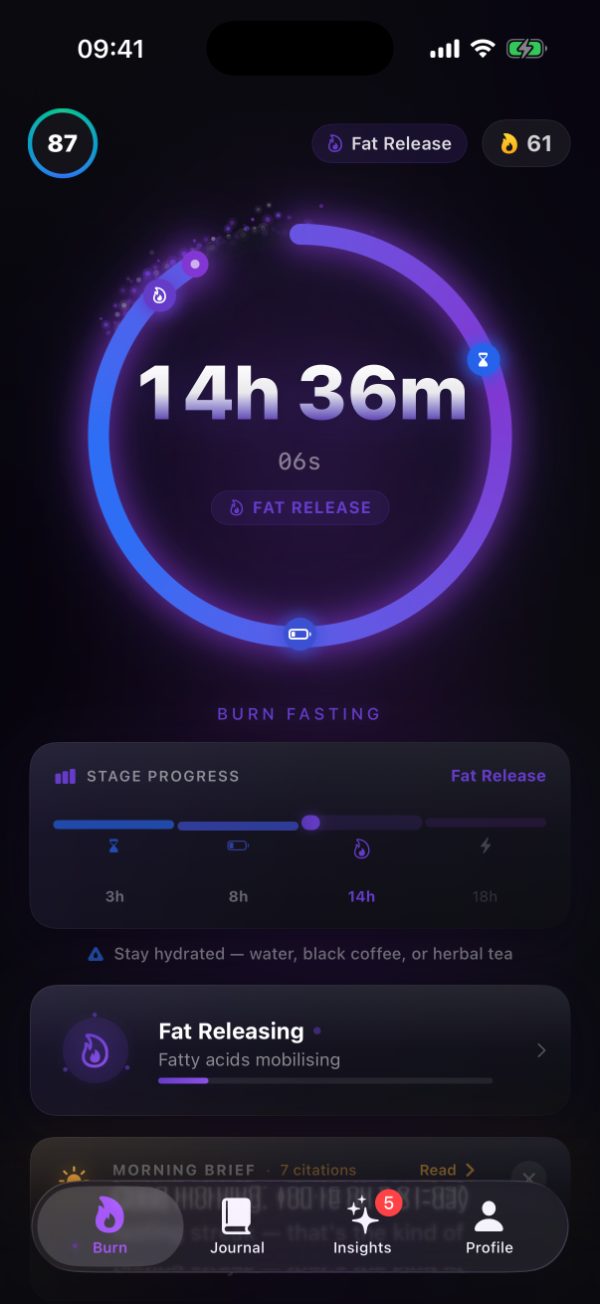
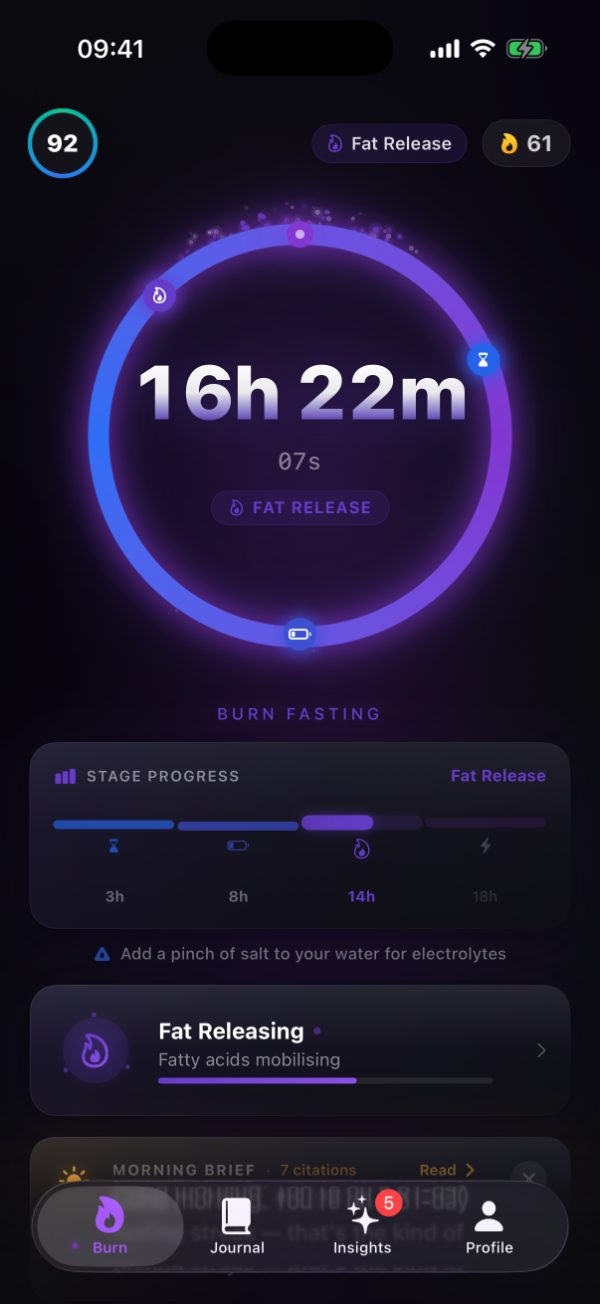
Time-restricted eating produces weight loss in controlled human trials, comparable to other approaches at matched intake. No trial establishes that an eight hour window outperforms a ten hour one. Which pattern a person can sustain matters more than which is theoretically optimal. Claims here are drawn from peer-reviewed research and traced in our evidence policy.
Burn names Fat Mobilisation at 14 hours because a timer has to draw a line. Nothing switches on at a stated hour, and onset varies with your last meal, your activity, your sleep and your metabolism. Speak to your doctor first if you are pregnant or breastfeeding, have a history of eating disorders, manage diabetes, take medication timed to meals, or are under 18.
Both are built into Burn, and switching between them keeps every fast you have already logged.
Download free on the App StoreiPhone, iPad, and Apple Watch. Requires iOS 18 or watchOS 11.