 Burn
Get Burn
Burn
Get Burn
Burn
Get Burn
Burn
Get Burn
HOME / GUIDES / HUNGER WHILE FASTING
Somewhere between hour 12 and hour 16 comes the point where eating feels non-negotiable. That is the most common point a fast ends early, and it is also the point that passes on its own if you give it twenty minutes.
Your body releases ghrelin on a schedule roughly aligned with the times you normally eat. It peaks, then it falls, whether or not food arrives. Knowing which hour your waves land in turns hunger into something you can plan around.
Shape of the pattern, not a measurement. Where your own peaks fall depends on when you usually eat.
Why it passes
If you usually eat at noon, your body sends the signal around noon whether or not you eat. Skip the meal and the signal still arrives, then leaves.
The wave rises, crests, and drops. It does not keep climbing until you give in, which is why twenty minutes is usually enough to be on the other side of it.
The waves follow the pattern you feed them. Change the pattern and, within a week or two, the peaks move and flatten.

What to do in the moment
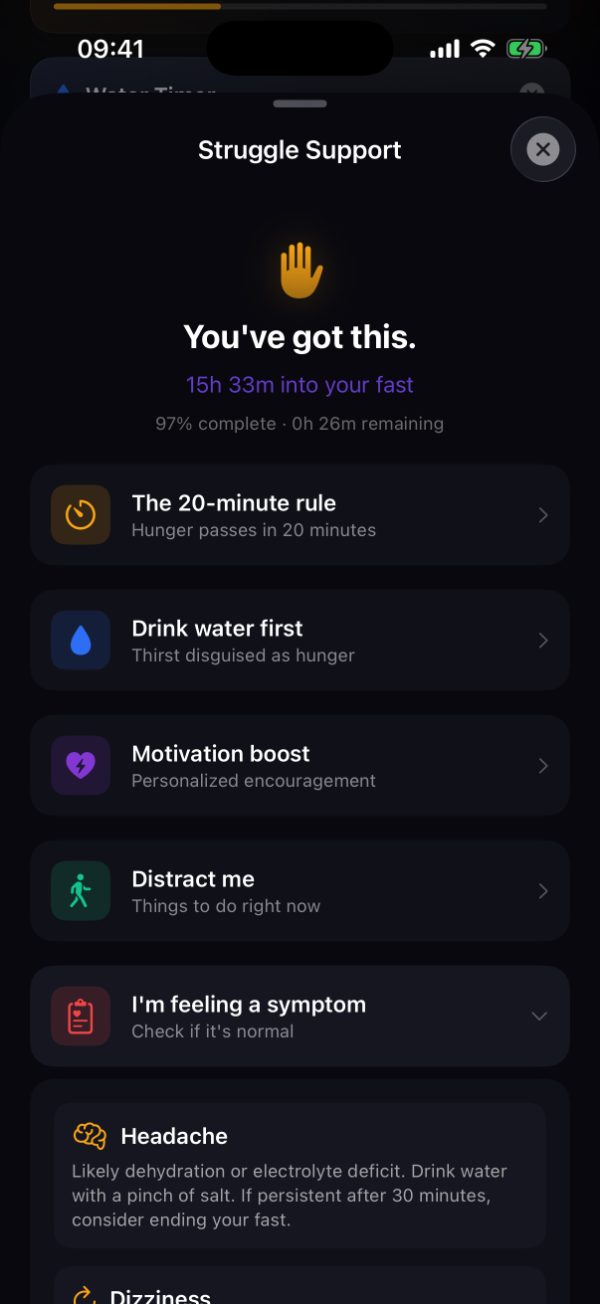
Burn's 20-minute rule starts a hunger timer and leaves ending the fast available the whole time it runs. Nothing is locked. You are just agreeing to check again in twenty minutes.


Thirst arrives dressed as hunger more often than people expect. Burn logs a glass and starts a ten minute timer.
Less food means less sodium. A pinch in your water settles a lot of what reads as hunger or a headache.
Both suppress appetite and neither breaks the fast. This is the standard tool for a difficult afternoon.
Distract me offers things to do right now. A walk covers most of a twenty minute wave by itself.
Remind me why replays the goal you set at the start, in your own words.
A fast you end deliberately is a finished decision. A fast you abandon is what makes the next one harder.
Hunger, or something else
Burn's symptom check names what you are feeling and tells you what it usually is. A headache is likely dehydration or an electrolyte deficit: drink water with a pinch of salt, and if it persists after thirty minutes, consider ending the fast.
USUALLY FINE
Hunger waves, mild irritability, feeling cold, a stomach that grumbles at your old meal times.
STOP AND EAT
Dizziness that does not settle, heart palpitations, shaking, or feeling genuinely unwell.
The timer is a tool, not an instruction. Ending a fast because your body asked you to is not a failure, and Burn records it as a completed session either way.
That ghrelin follows habitual meal timing and rises and falls in cycles is drawn from peer-reviewed research and traced in our evidence packet. How long an individual wave lasts, and how quickly the pattern shifts, varies between people.
Burn times the fast, names the stage the clock has reached, and offers the six support tools when you need them. It is not medical advice, and it does not diagnose anything you are feeling.
Burn opens six tools mid-fast, including the hunger timer that keeps ending the fast one tap away.
Download free on the App StoreiPhone, iPad, and Apple Watch. Requires iOS 18 or watchOS 11.