 Burn
Get Burn
Burn
Get Burn
Burn
Get Burn
Burn
Get Burn
HOME / FASTING / 18:6
You don't eat for 18 hours, then you eat for 6. Dinner at 8pm, first meal at 2pm the next day, or dinner at 6pm and lunch at noon.
Those two extra hours take you to the edge of Ketosis Entry, where a 16:8 finishes in Fat Mobilisation. That is the reason to step up to it.

An 18-hour fast ends exactly at the Ketosis Entry boundary. Run a little past your goal and you are into the stage itself.
A 16:8 finishes mid Fat Mobilisation. An 18:6 runs to the boundary of the next stage, where ketone production becomes meaningful.
Six hours fits two meals rather than three. The two workable shapes are pushing lunch to mid-afternoon, or eating dinner early.
The hard window is the same one, around hour 14, but on an 18:6 you still have four hours to go when you reach it.
16:8 or 18:6
Same day, same timer, two different finishing points.
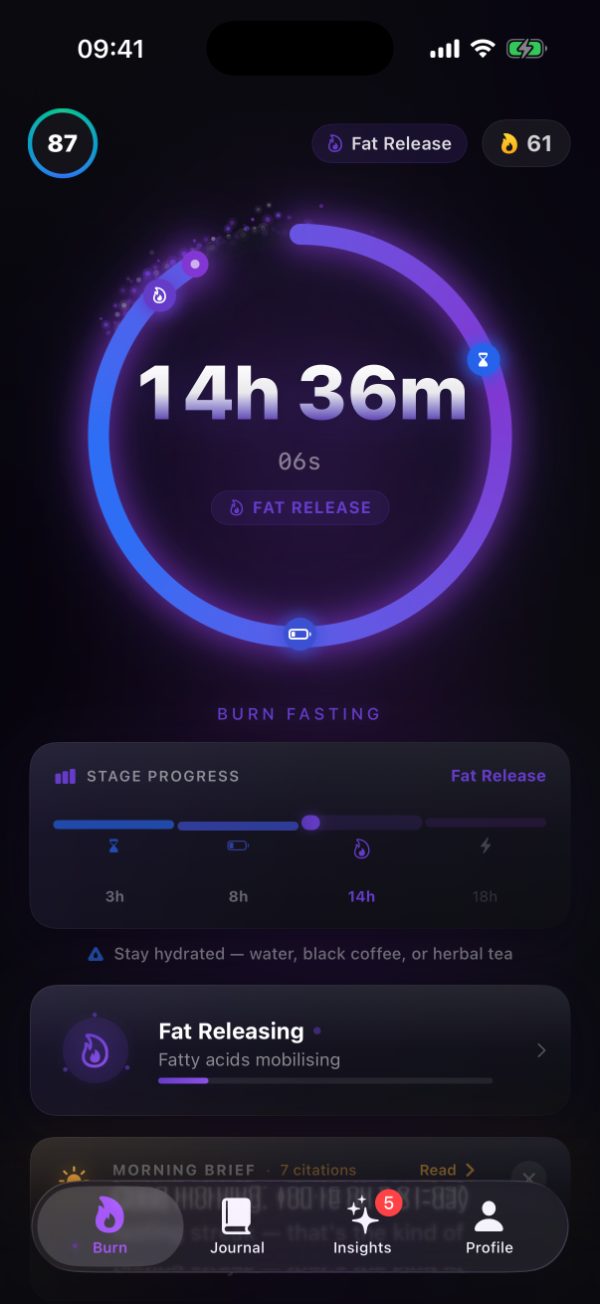
Ketosis Entry appears as KETOSIS on the timer screen, where space is tight. Same stage, shorter name.
16:8
Finishes in Fat Mobilisation. Eight hours of eating covers lunch and dinner, so most plans still work.
Reaches: Fat Mobilisation
The 16:8 guide →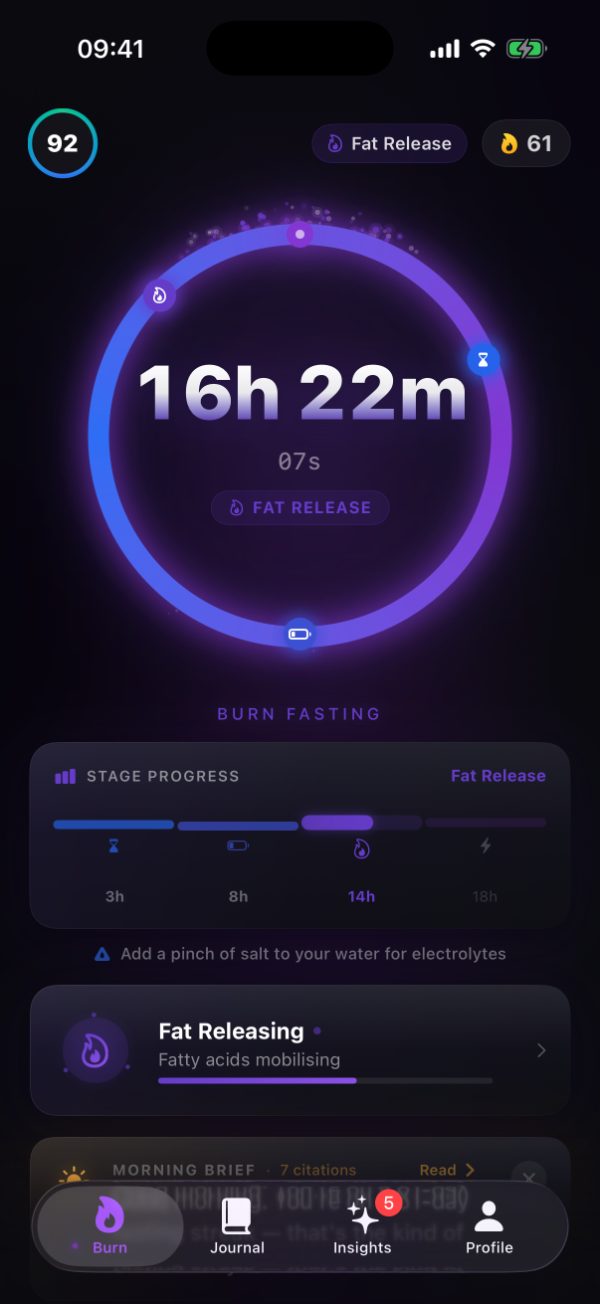
18:6
Runs to the Ketosis Entry boundary. Six hours of eating means two meals, and usually one of them moves.
Reaches: Ketosis Entry at 18h
What happens at 18 hours →
Pick your window
The window you can hold on a Saturday matters more than which hours you pick.
11am - 5pm
A late breakfast and an early dinner. Suits anyone who sleeps badly after eating.
Hardest part: dinner invitations.
2pm - 8pm
StandardSkip breakfast, push lunch to mid-afternoon, keep dinner where it is.
Hardest part: hours 12 to 16, late morning.
noon - 6pm
Lunch at the usual time and dinner brought forward. Good if you train in the morning.
Hardest part: eating dinner before six.
Stepping up to it
If 16 hours still feels like work, 18 will feel like a fight. Get the shorter one boring first.
Finishing dinner earlier is easier than pushing lunch later, and it puts more of the fast into your sleep.
Two meals in a shorter window makes under-eating easier to do by accident. Eat properly when the window opens.
A weekday 18:6 with easier weekends is a schedule people keep. Seven perfect days is not.
What the evidence supports
Time-restricted eating is one of the better studied approaches to eating patterns. What is less established is whether 18 hours beats 16.
Burn tracks elapsed time and names the stage that time corresponds to. It does not measure ketones or anything else happening in your cells. If you are pregnant or breastfeeding, have a history of disordered eating, manage diabetes, or take medication timed with food, speak to a clinician before starting.
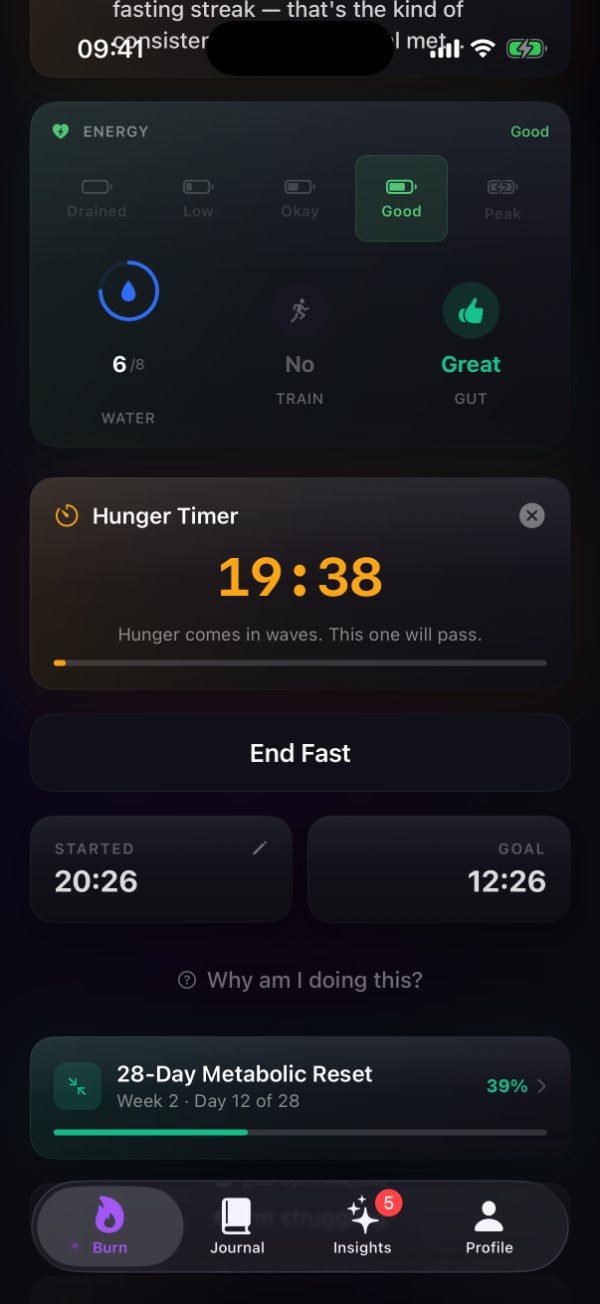
Burn holds the window, names each stage as you cross it, and has the support tools ready for the hours that are hard.
Download free on the App StoreiPhone, iPad, and Apple Watch. Requires iOS 18 or watchOS 11.