HOME / GUIDES / HOW TO MAKE FASTING EASIER
Fasting gets easier through adjustments you make once, not through effort you keep spending. Four fixable things account for a lot of the difficulty.
Sleep, salt, the shape of your last meal, and the hours you chose. Fix those and the hard hour gets much quieter.

The four levers
Sleep first, because everything else gets harder without it. Then the fixes that take minutes.
A short night raises hunger and lowers your tolerance for it. A fast that felt routine last week can feel impossible on five hours of sleep, and no amount of willpower closes that gap.
Eight hours asleep also removes eight hours of waking fasting, which is why a 14 hour fast rarely feels like discipline and a badly slept one does.
Insulin falls during a fast, and lower insulin tells your kidneys to release sodium and water. Drinking plain water without replacing the salt dilutes what is left and the headache gets stronger.
A pinch of salt in your water or a cup of broth is the standard fix, and neither ends the fast.
Protein and fat keep you satisfied for longer than the same calories from refined carbohydrate. A dinner built around bread and sugar tends to leave you hungry early in the fast.
Same window, same length, different feeling by hour 13.
A window that ends at 6pm is hard if you sit down to dinner at 8. That is not a fasting problem, it is a scheduling one, and moving the hours fixes it entirely.
Put the fasting hours where your life already has a gap. Overnight is free, so build outward from there.
In the moment
Hunger arrives in waves that peak and pass rather than climbing steadily. The wave passes, and the goal is to be doing something else while it does.
Black coffee, plain tea, or hot water. Warmth, fluid, and something to hold. Herbal tea in the evening if caffeine is a problem.
Ten minutes outside changes the subject more effectively than deciding not to think about food.
A task, a call, a chapter. Hunger is much louder when you are idle, which is why the hard hour is usually a quiet one.
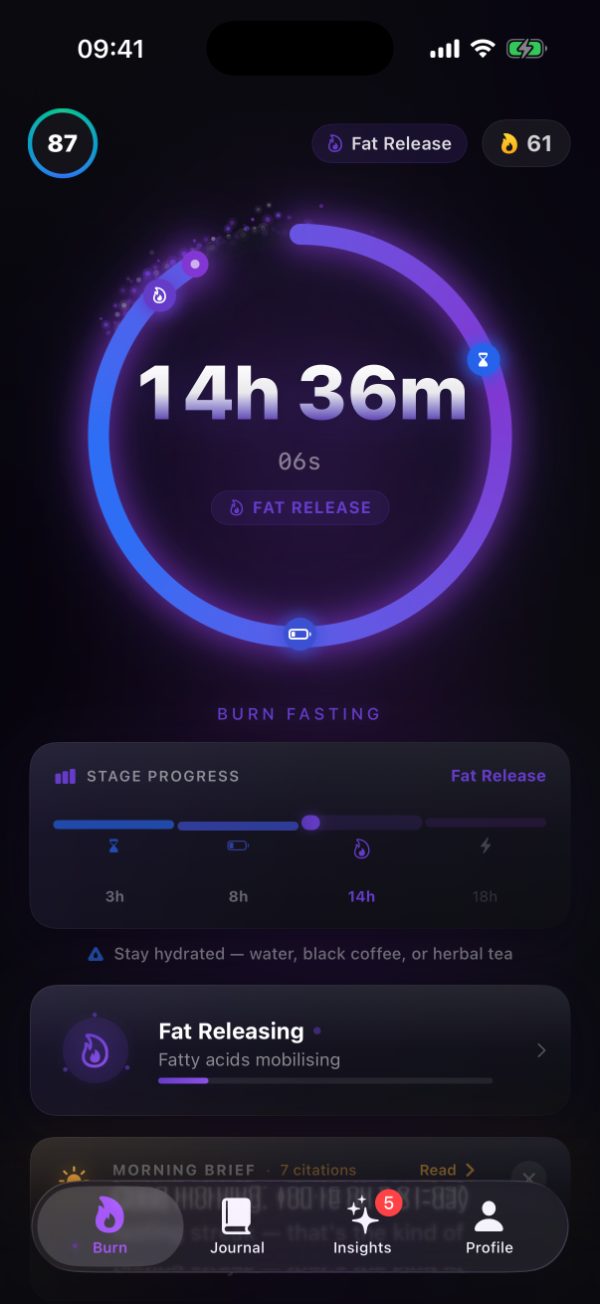
Seeing that you are at hour 14 of 16 reframes the wave as almost over rather than as a decision to make.
Burn's Struggle Support keeps six of these one tap from the timer, including a hydration prompt, a symptom check and a breathing exercise. See the support tools.
It gets easier on its own
Your body expects food at the times it usually gets it, and those expectations take a few weeks to move. Early fasts are harder than later ones at the same length, which means a difficult first two weeks is not a verdict on whether this suits you.
Changing the schedule every few days restarts the adjustment. Two weeks at the same window is what lets it settle.
Adaptation should show up as fasts that take less effort. When it does not, the length is too long for now and dropping back two hours is the fix.

Short sleep affecting appetite regulation is well described, as is the link between lower insulin, sodium excretion and fluid loss during fasting. Protein and fat producing longer satiety than refined carbohydrate is also established. Claims are drawn from peer-reviewed research and traced in our evidence policy.
None of this applies to dizziness that does not settle, heart palpitations, or shaking. Stop and eat, whatever the timer says. When to stop a fast covers the difference.
Burn keeps six tools one tap from the timer, and logs the water and minerals that make the difference.
Download free on the App StoreiPhone, iPad, and Apple Watch. Requires iOS 18 or watchOS 11.