 Burn
Get Burn
Burn
Get Burn
Burn
Get Burn
Burn
Get Burn
HOME / GUIDES / ELECTROLYTES
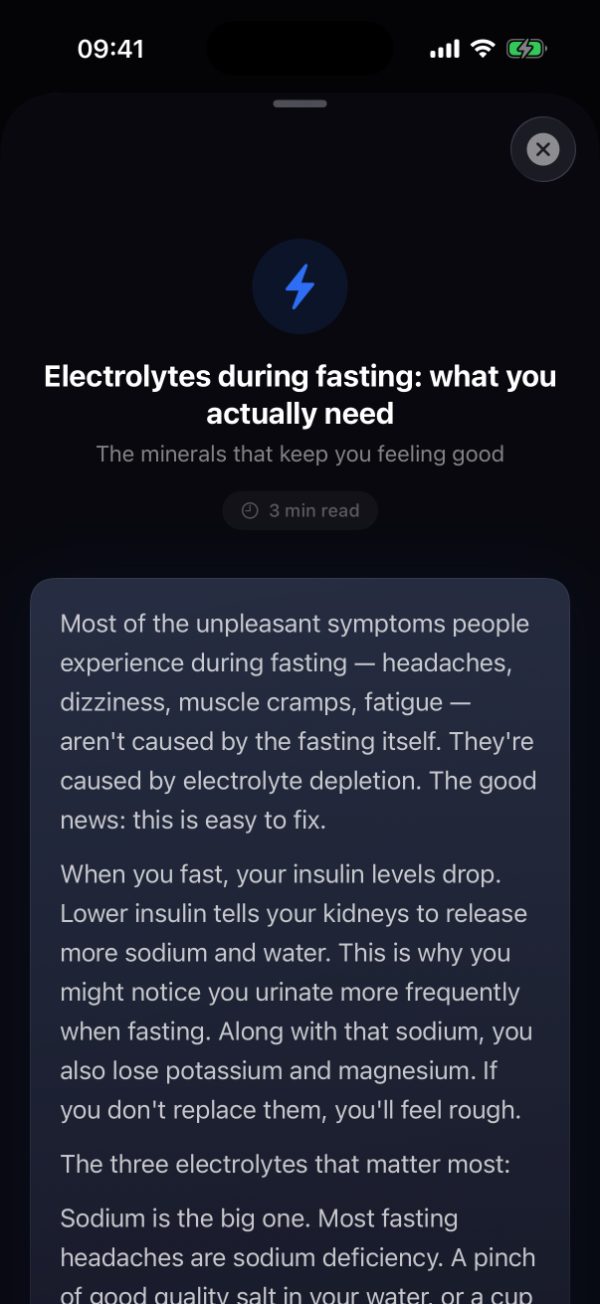
Headaches, dizziness, cramps and fatigue during a fast are usually electrolyte depletion rather than the fast itself. That is a fixable problem, and it is fixable in the kitchen.
Three minerals do almost all of the work. Burn logs all three alongside your water.
The big one. Most fasting headaches are sodium loss, not dehydration alone.
Goes out with the sodium. Low potassium shows up as fatigue and weakness.
The one behind muscle cramps and restless sleep on longer fasts.
Why it happens
Going without food for a stretch lowers insulin. That is the mechanism behind most of what fasting does.
Lower insulin tells the kidneys to let sodium and water go. The extra trips to the bathroom during a fast are this, and so is a chunk of early scale movement.
You are also not eating, which is where these normally come from. Replace nothing and you feel rough. Replace them and most of it goes away.
Drinking more plain water alone can make it worse, because water without salt dilutes what you have left.
Reading the symptom
Burn's symptom check gives you the same read mid-fast, in one tap.
Usually sodium. A pinch of good quality salt in your water, or a cup of salted broth, is the standard fix. If it persists after thirty minutes, consider ending the fast.
Often potassium, and often confused for the fast being too long. Worth checking before you shorten your schedule.
Typically magnesium, and more common on fasts past 24 hours or alongside hard training.
Dizziness that does not settle, heart palpitations or shaking are a different category. Stop, eat something, and speak to a doctor if it repeats.
In the app
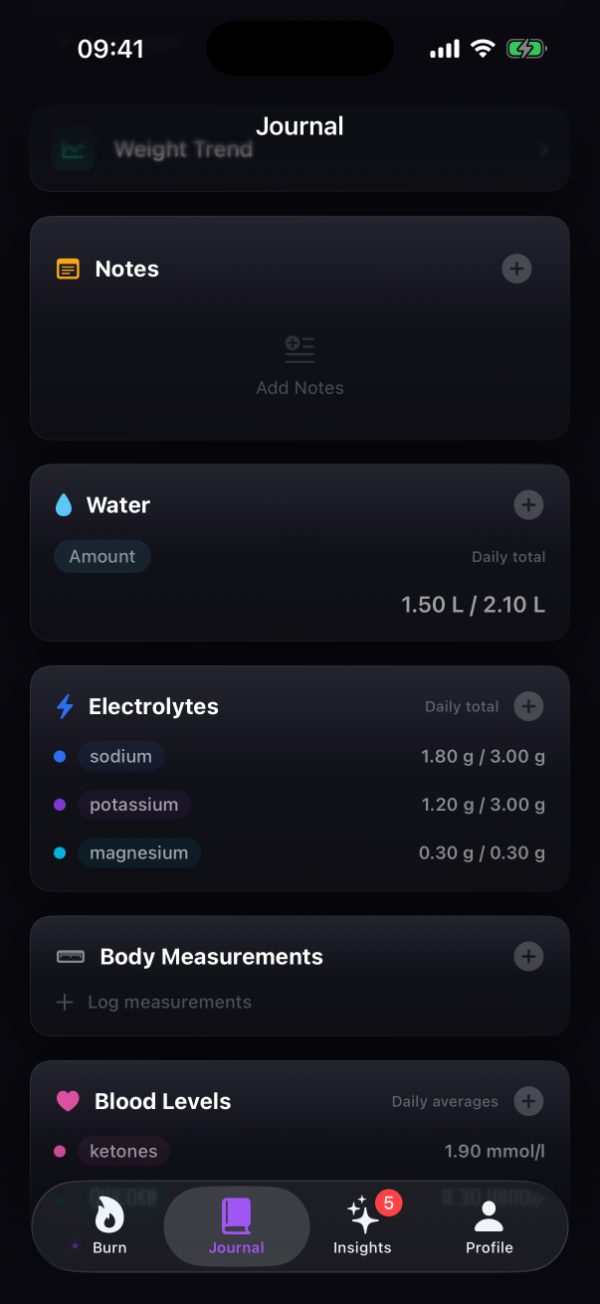
Burn's Journal holds sodium, potassium and magnesium as daily totals next to your water, so a rough week has a record you can look back at rather than a vague memory of feeling off.
Set the daily figure yourself. Hydration also feeds your Body Score.
Blood Levels holds numbers you have measured yourself. Burn stores them; it does not estimate them.
Notifications through the fasting hours, rate-limited and aware of your quiet hours.
There is no single dose that suits everyone, and Burn does not publish one. Needs shift with your fast length, your training, the heat, and your own health. Anyone managing blood pressure, kidney function, or heart medication should get advice before adding salt or supplements.
The link between lower insulin, sodium excretion and fluid loss during fasting is drawn from peer-reviewed research and traced in our evidence packet. Burn logs what you enter and does not measure your electrolyte status, ketosis, or metabolic state.
Burn logs water, sodium, potassium and magnesium next to every fast, with reminders through the fasting hours.
Download free on the App StoreiPhone, iPad, and Apple Watch. Requires iOS 18 or watchOS 11.