HOME / GUIDES / FASTING AND SLEEP
Your longest fast happens while you are asleep, and how you sleep changes how the next day's fast feels. The relationship runs both ways.
Where the window sits, how late you eat, and what a bad night does to hunger the following morning.
Sleep is most of your fast
This is the practical reason overnight fasting works for so many people. Half the clock runs while you are unconscious, and the waking half is split either side of the night.
EVENING
Closing the window a few hours before bed puts the front of the fast into your evening instead of your morning, where it competes with less.
OVERNIGHT
Sleep carries you through Early Fasting and into Glycogen Depletion without a decision to make. Burn keeps counting and buzzes at each boundary.
MORNING
Stop eating at eight and you are twelve hours in by breakfast time. The remaining stretch is short enough to hold with coffee and a busy morning.
The other direction
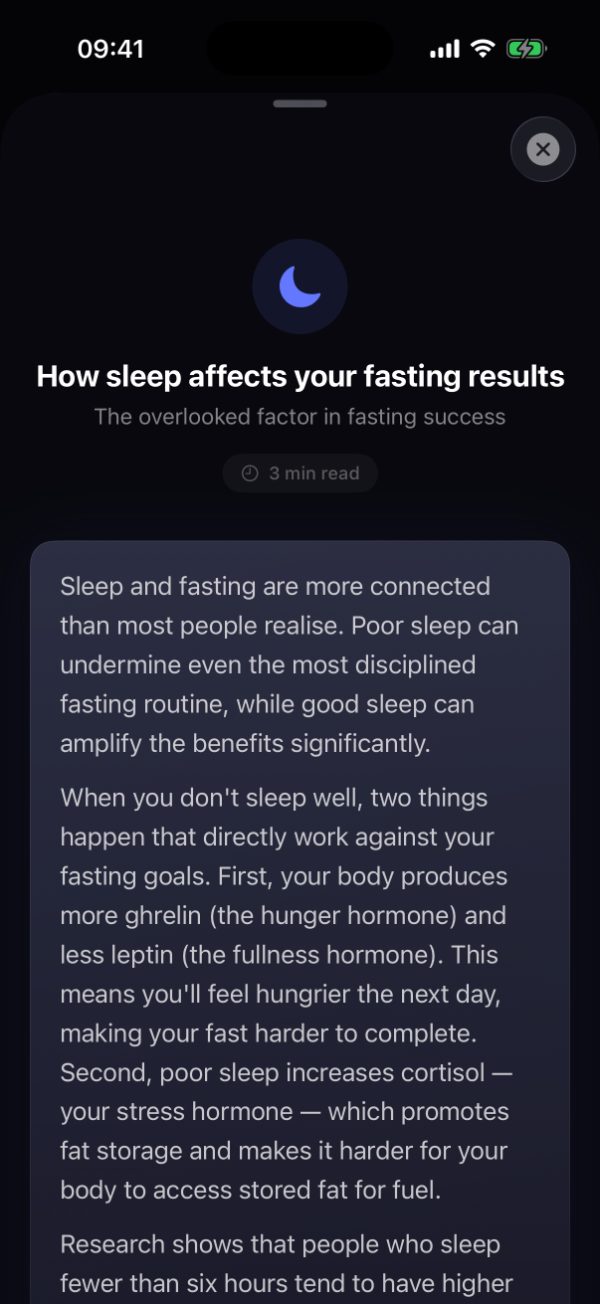
Sleep restriction shifts the hormones that govern hunger and fullness, and the effect on appetite the following day is well documented. A fast that felt easy last week can feel unreasonable after five hours in bed.
A large meal immediately before bed is a common complaint in sleep research. An earlier window is one of the few changes that helps the fast and the night at the same time.
If your window closes early and you lie awake hungry, shift the whole window later rather than shortening the fast. The length matters less than the placement.

In the app
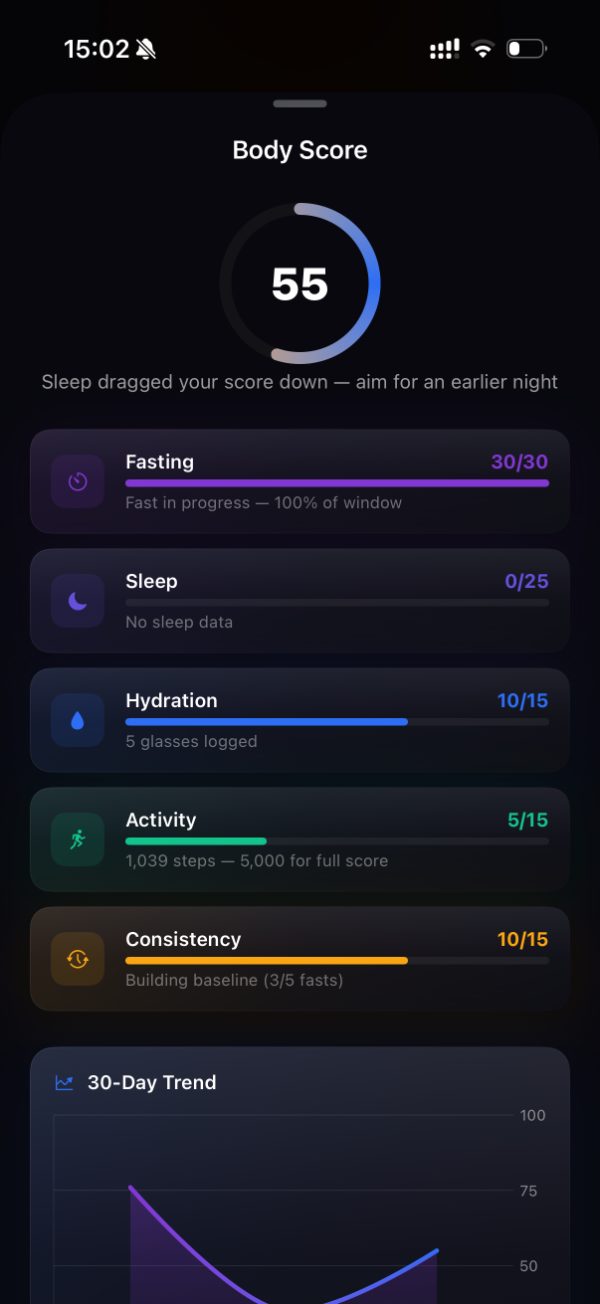
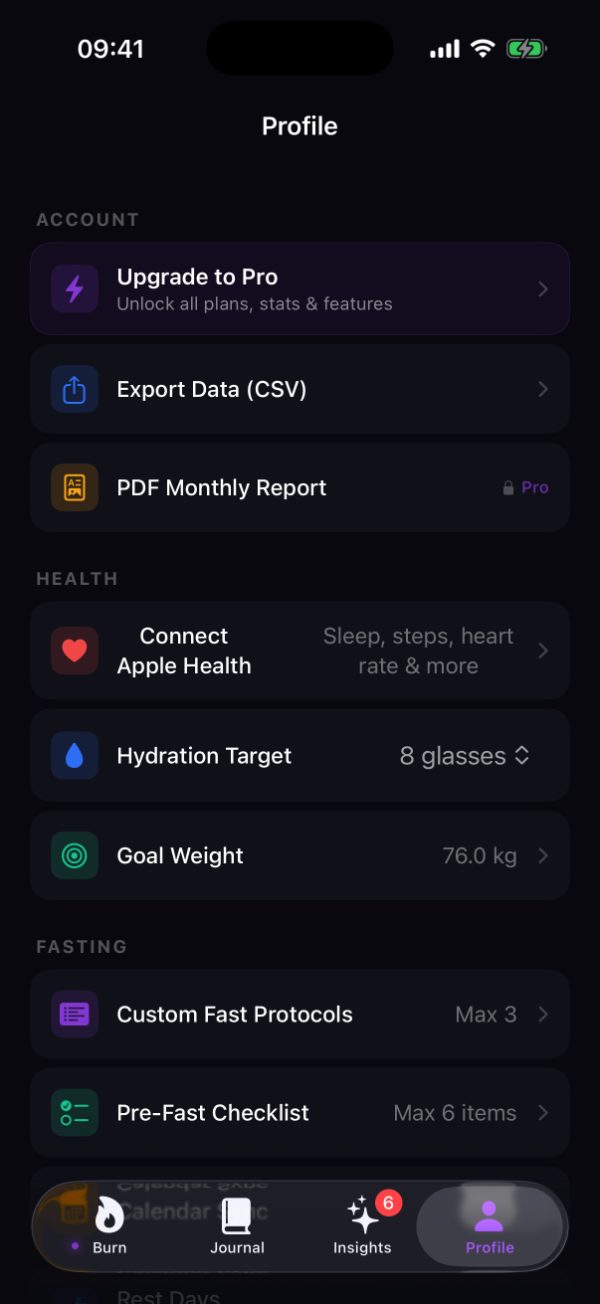
Without the connection, Body Score is built from three parts. Grant access and sleep and activity join it, so a rough night shows up in the score rather than as an unexplained hard morning.
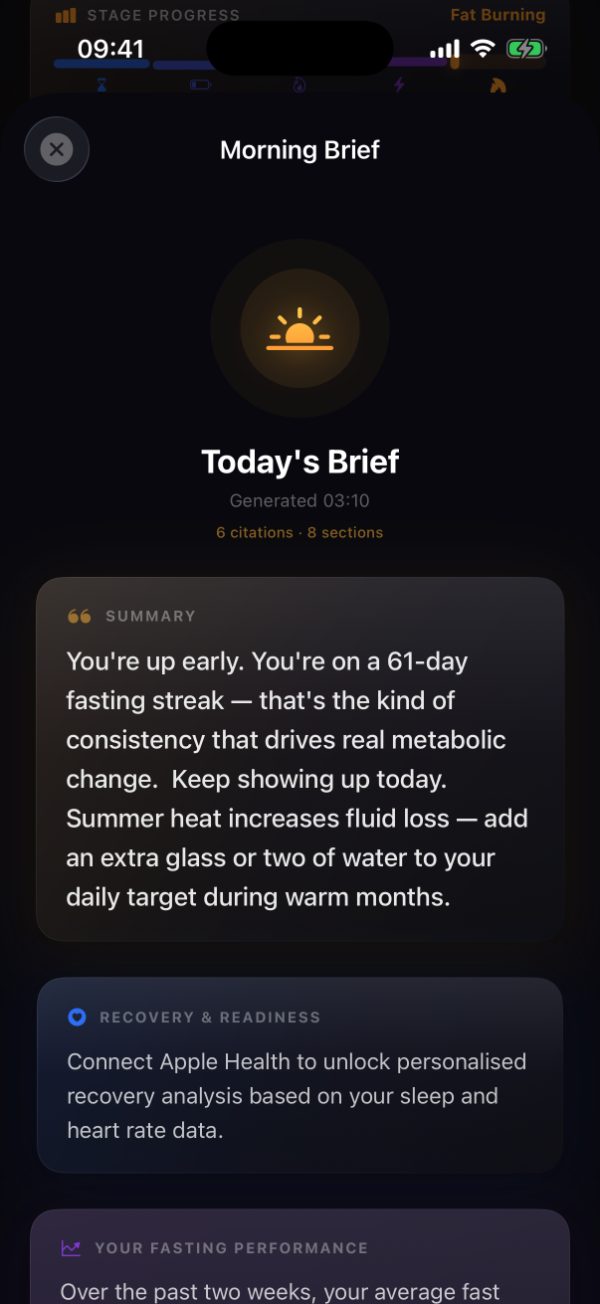
Your Morning Brief reads the same signals, and gives you the day's picture before you decide how long to fast. Body Score is a Burn product score, not a health or metabolic assessment.
The effect of short sleep on appetite hormones, and of late heavy meals on sleep quality, is drawn from peer-reviewed research and traced in our evidence packet. How much either one affects a given person on a given night is individual.
With your permission Burn reads sleep from Apple Health and uses it in Body Score. It does not score your sleep quality, diagnose a sleep problem, or measure ketosis, autophagy, or metabolic state.
Burn counts through the night, names every stage you pass, and folds your sleep into the picture when Apple Health is connected.
Download free on the App StoreiPhone, iPad, and Apple Watch. Requires iOS 18 or watchOS 11.