 Burn
Get Burn
Burn
Get Burn
Burn
Get Burn
Burn
Get Burn
HOME / GUIDES / FASTING AND EXERCISE
You can train comfortably in a fasted state, and low intensity work goes fine at almost any hour. Heavy lifting and hard intervals are a different question, and the answer depends on where you are in the fast.
What each kind of session needs, and how to place it against your window.
Rough guide by session
Why intensity decides it
Low intensity work runs largely on fat, which a fast makes more available. High intensity work draws on stored glucose, which a fast is steadily running down. That single difference explains most of the advice on this page.
The claims on this page are drawn from peer-reviewed research and traced in our evidence packet.
A walk, an easy ride or steady cardio at a conversational pace sits comfortably at hour eight or hour twenty. Plenty of people prefer it.
A normal weights session at hour ten usually feels fine. The same session at hour twenty often does not, because Glycogen Depletion is well underway.
Put your heaviest lifts and your interval sessions inside the eating window, with a meal before or after. This is where fasting and performance genuinely conflict.
Placing the session
You finish the session fasted and eat shortly afterwards, which handles recovery without breaking the fast early.
Food before and after. The right choice for heavy lifting, hard intervals, and any session you care about performing well in.
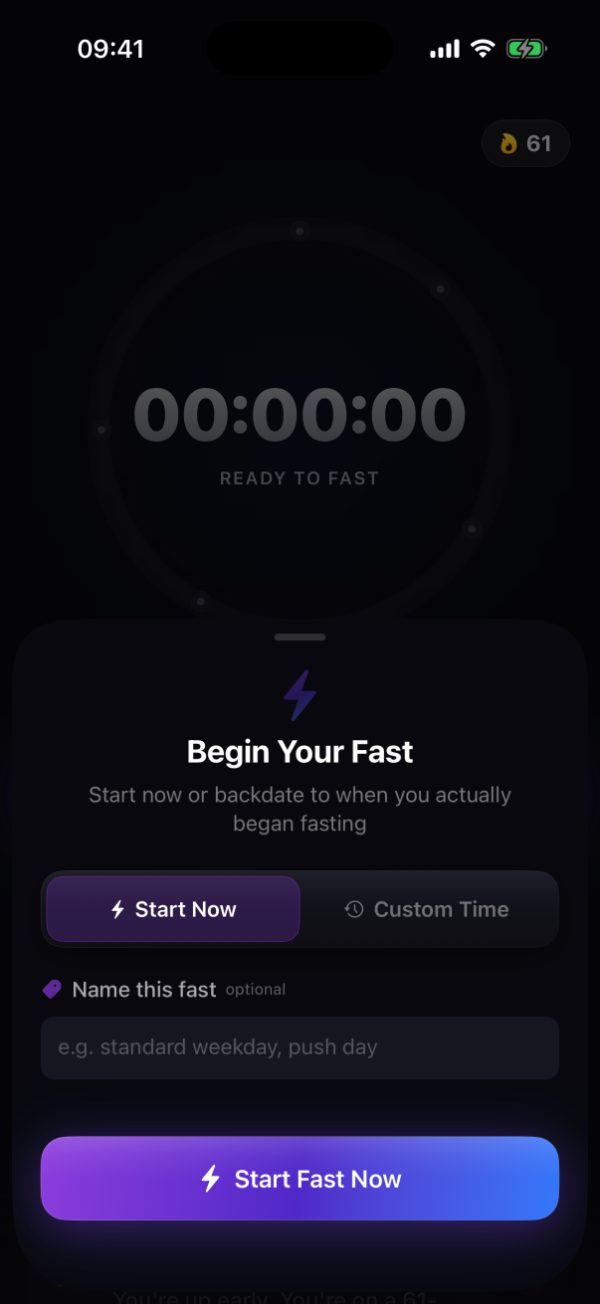
If your training time is fixed, shift the eating window rather than forcing the session into the wrong hours. Burn lets you start a fast whenever the day requires it.
Building muscle
Not impossible together, but it is the one goal where a shorter fasting window is usually the better call.
A day's protein is easier to hit across three or four meals than one or two. A four hour window makes this genuinely hard.
Fasting tends to reduce intake, which is useful for losing weight and unhelpful for gaining muscle. The two goals ask for opposite things.
A longer eating window leaves room for the meals training needs while keeping a daily fasting habit. Save 20:4 and OMAD for phases where gaining is not the aim.
Salt before you go. Light-headedness during a fasted session is more often sodium than fuel.
Black coffee is fine. It does not break the fast and it makes an early session easier.
Expect a lower ceiling. Same session, slightly less in the tank. Judge the day on effort, not on the numbers.
BCAAs break the fast. Amino acids around a workout are fine, but they belong inside the window.
Dizziness that does not settle, shaking, or a heart rate that will not come down means ending the session and eating. Pushing on through those signals is not discipline.
Fasted training on very little sleep is a poor combination. So is a hard session on the second of two restricted days.
Speak to a doctor before combining fasting and training if you manage diabetes, take medication timed to meals, are pregnant or breastfeeding, or have a history of eating disorders.
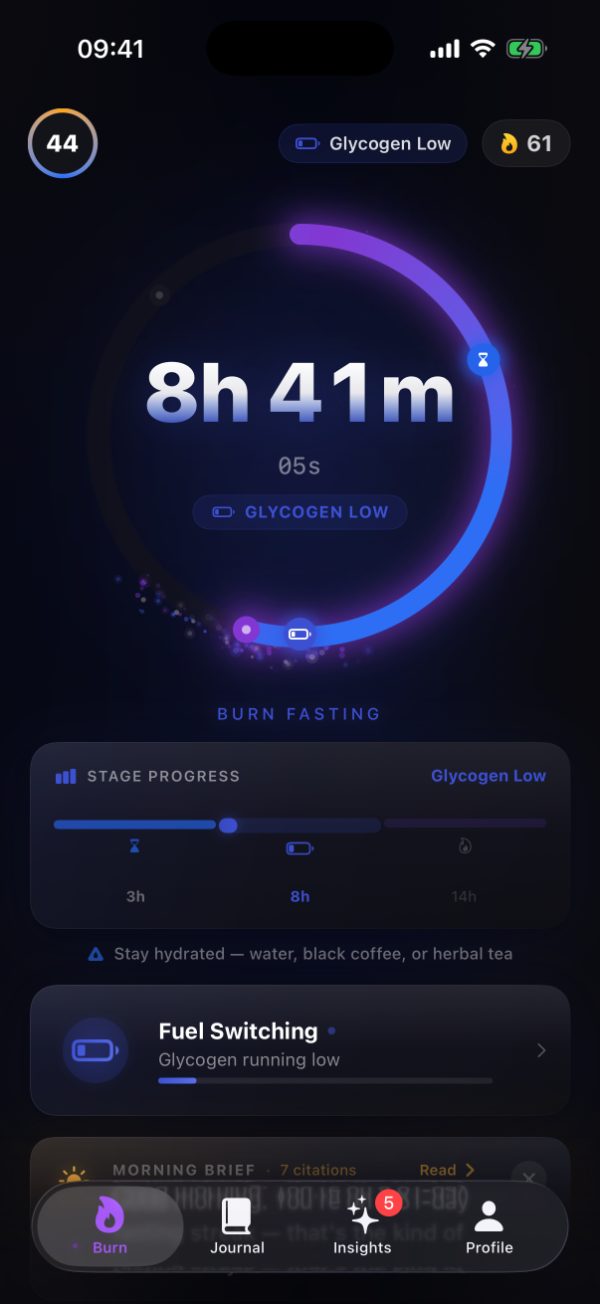
Burn names the stage you have reached, on your phone and on your wrist, so you can place a session with something better than a guess.
Download free on the App StoreiPhone, iPad, and Apple Watch. Requires iOS 18 or watchOS 11.