 Burn
Get Burn
Burn
Get Burn
Burn
Get Burn
Burn
Get Burn
HOME / GUIDES / HOW TO BREAK A FAST
The longer the fast, the more the first meal matters. After 16 hours you can eat normally. After 48 you should start small and build.
What to eat, in what order, at each fast length.
The order matters
What you put first on the plate decides how the next few hours feel. This holds at every fast length.
01
Eggs, fish, meat, yogurt. The most filling thing on the plate and the one worth prioritizing after a long gap.
02
Cooked rather than raw is easier on an empty stomach after a longer fast. Olive oil, avocado, nuts alongside.
03
Rice, bread and potatoes are fine, but a large plate of them on their own after a fast is what produces the slump an hour later.
04
Fullness signals lag behind eating. Take about twenty minutes over the first meal rather than finishing it quickly.
Common mistakes
This is why some people fast for months without a result. Two normal meals in the window, not a feast.
Uncomfortable after 24 hours and worse after 48.
Broth works well as a first thing partly because it carries sodium, which a long fast depletes.
Ending a fast early is a normal decision, not a failure. Burn logs a shorter fast just as readily as a completed one.

Ending it in Burn
Burn shows the duration, the stage you reached and how hard it felt. A fast ended at 14 hours is a 14 hour fast in your history, which is more useful than a gap.
Effort recorded at the end is what makes the history worth reading later, when you are deciding whether to lengthen a schedule.
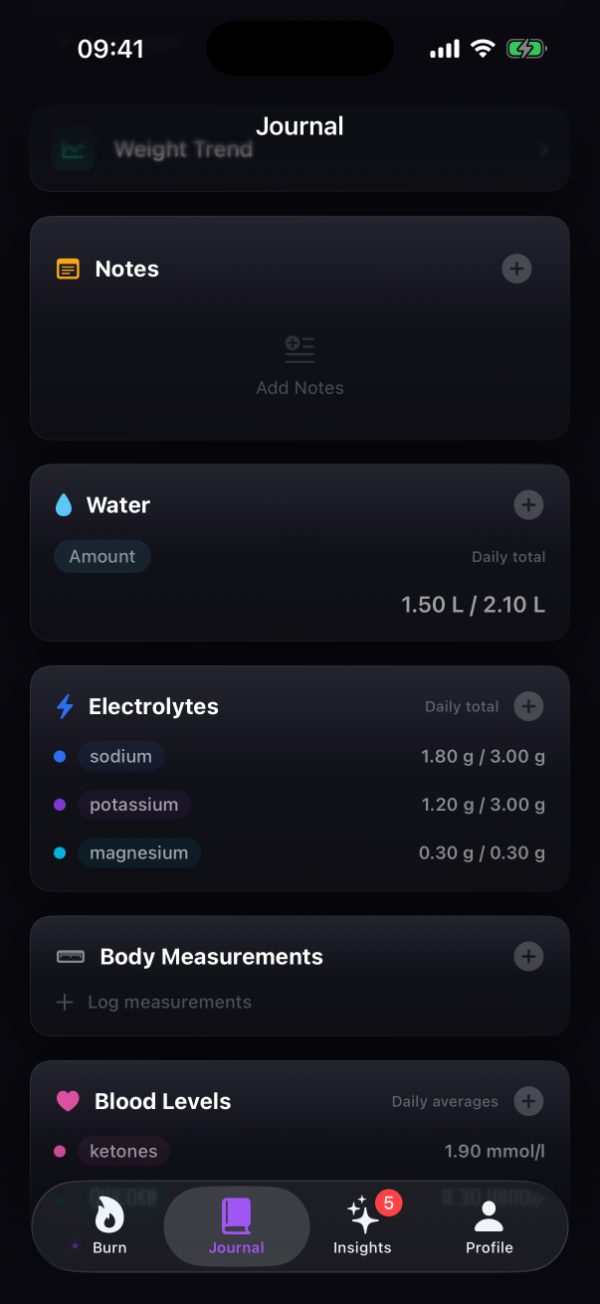
The Journal keeps hydration on the same daily view as the fast, which matters most on the day you break a long one.
Dizziness that does not settle, heart palpitations, shaking or confusion mean ending the fast now, whatever the timer says.
Speak to a doctor before fasting if you are pregnant or breastfeeding, have a history of eating disorders, manage diabetes, take medication timed to meals, or are under 18. Fasts beyond 48 hours should be planned with a doctor.
Burn names the stages on the way up, records the duration and effort at the end, and keeps the history you can act on.
Download free on the App StoreiPhone, iPad, and Apple Watch. Requires iOS 18 or watchOS 11.