 Burn
Get Burn
Burn
Get Burn
Burn
Get Burn
Burn
Get Burn
HOME / FASTING / 16:8 VS OMAD
Around seven hours separate them, and those hours change almost everything about how the day feels. One stage difference, two very different weeks.
Here is what each one reaches, what each one asks, and how to tell which suits you.
16:8
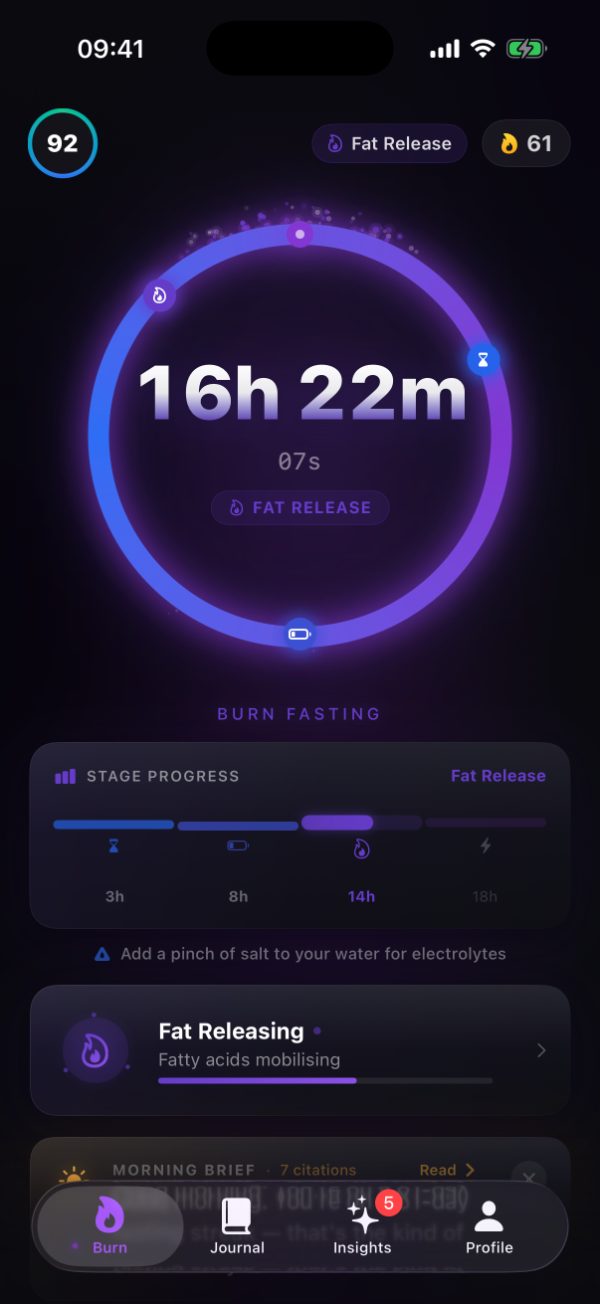
ENDS IN FAT MOBILISATION
Usually breakfast dropped and two meals in the afternoon and evening. Eight hours is enough room that no meal has to be rushed and nothing needs explaining to the people you eat with.
OMAD
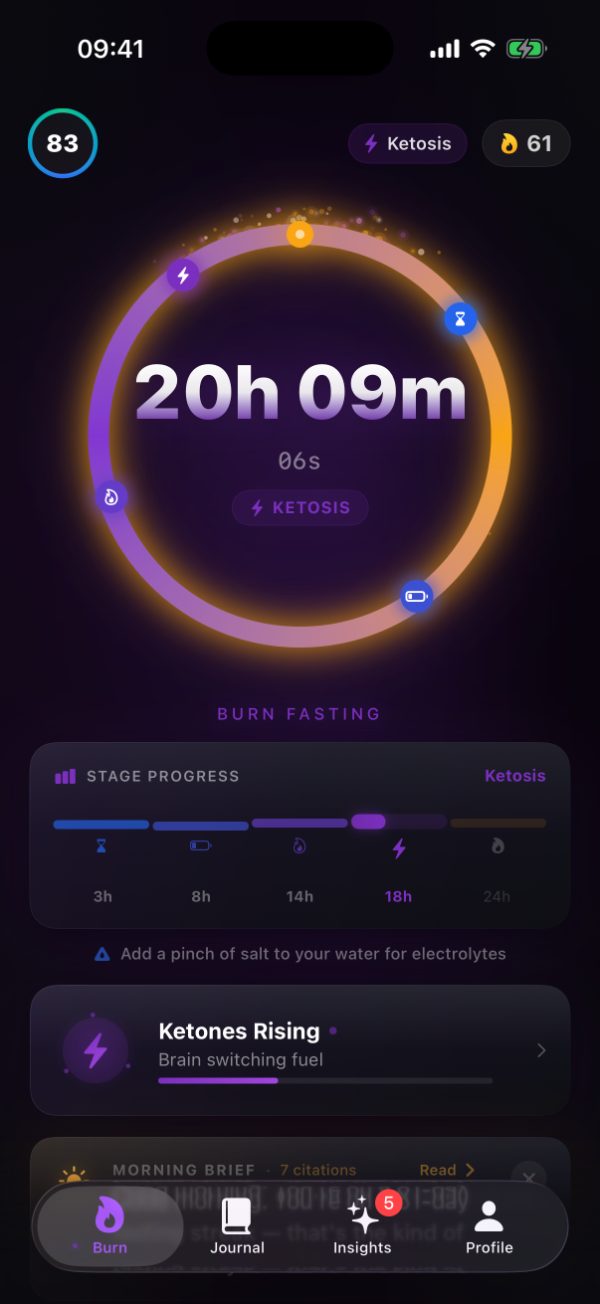
ENDS IN KETOSIS ENTRY
Everything in a single sitting. The clock is the easy part; getting a full day of food into one meal, and being free at the same hour every evening, is the demanding part.
Both fasts pass through the same first four stages. OMAD adds one more, and its extra hours are spent in the stage where ketone production becomes meaningful and hunger often drops. That is the whole physiological difference between them.
Where they really differ
One stage of difference is worth less than it sounds. What separates these two in practice is what they do to your evenings and your meals.
EATING
A full day of food in one sitting is harder than it sounds, and getting enough protein into a single meal takes planning. Eight hours lets you eat normally without thinking about it.
SOCIALLY
A dinner invitation fits inside eight hours almost regardless of the time. One hour has to be the hour, which makes OMAD the harder schedule to keep on an unpredictable week.
TRAINING
Hard efforts want glycogen. An eight hour window gives you somewhere to put a session with food either side of it; a one hour window does not.
Choosing
Eight hours absorbs a late meeting, a lunch out, or a dinner that moves. A schedule you keep on a bad week beats a stricter one you abandon.
Some people find one decision a day simpler than three. If your evenings are reliably yours and you like large meals, the clock stops being the difficult part.
Run 18:6 and 20:4 comfortably before going to one meal a day. Switching plans keeps your history intact.
Time-restricted eating produces weight loss in controlled human trials, comparable to other approaches at matched intake. No trial establishes that a one hour window outperforms an eight hour one. Which pattern a person can sustain matters more than which is theoretically optimal. Claims here are drawn from peer-reviewed research and traced in our evidence policy.
Speak to your doctor first if you are pregnant or breastfeeding, have a history of eating disorders, manage diabetes, take medication timed to meals, or are under 18. A one meal a day pattern makes it harder to meet your needs, so it deserves that conversation more than a shorter window does.
Both are built into Burn, and switching between them keeps every fast you have already logged.
Download free on the App StoreiPhone, iPad, and Apple Watch. Requires iOS 18 or watchOS 11.