 Burn
Get Burn
Burn
Get Burn
HOME / SCIENCE / LIPOLYSIS
Body fat is not fuel until it has been broken down and released into your bloodstream. Lipolysis is that step, and it is what people are actually describing when they talk about burning fat.
Release and burning are two different processes, and the distinction is worth having.
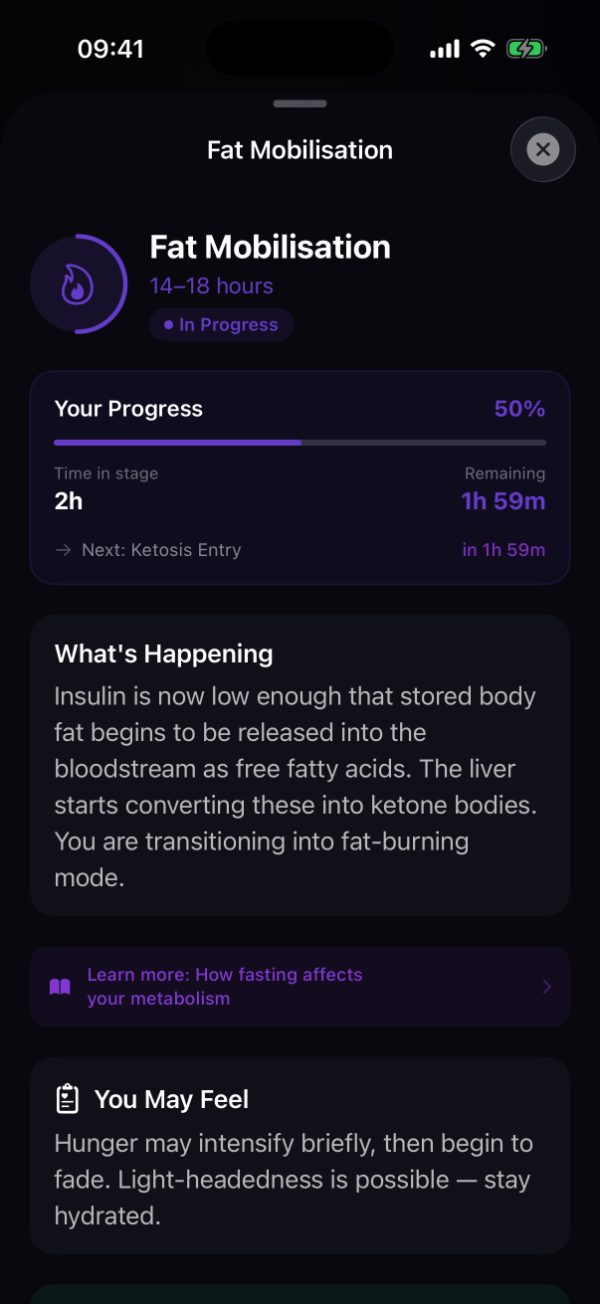
Burn names Fat Mobilisation at 14 hours, which is this process becoming the dominant supply rather than the moment it starts.
The distinction that matters
Lipolysis puts fatty acids into circulation. Whether they are then used for energy or returned to storage depends on whether your body needs the energy.
Fasting reliably produces that condition. This is the part a fast controls directly.
Circulating fatty acids that are not needed can be taken back up and re-stored. Releasing fat is not the same as losing it.
A long fast that ends in a large surplus releases fat and then puts it back. Total energy across the day is what settles the outcome.
What speeds it up
The common factor is energy demand with insulin low.
The longer insulin stays low, the more of the fast runs on released fat. This is the mechanism a fasting schedule is built around.
Activity raises energy demand, so more of what is released gets used rather than re-stored. A walk during a fast is doing more than passing the time.
With the easy fuel spent, fat has to carry a larger share. This is why the hours after 14 differ from the hours before.
Two things to know
Two facts about lipolysis that change how you read a fasting timer.
DRAWN FROM EVERYWHERE
Lipolysis draws on stores throughout your body, in a pattern set by factors outside your control. Fasting length, exercise and eating patterns all change how much is released, not which area it leaves.
THE ENERGY HAS TO BE USED
Reaching a named stage on a timer means you reached that duration. Fat leaving storage becomes fat you have lost once the energy is spent, which is why the hours you accumulate matter more than any single fast.
Lipolysis, its hormonal control, and the fate of circulating fatty acids are standard physiology. Claims here are drawn from peer-reviewed research and traced in our evidence policy. Burn maps elapsed time to named stages and does not measure ketosis, autophagy, or metabolic state.

What to actually track
Since released fat can be re-stored, the number worth watching is not a stage you touched once. It is how many hours you accumulate week after week, because that is what puts your total energy where it needs to be.
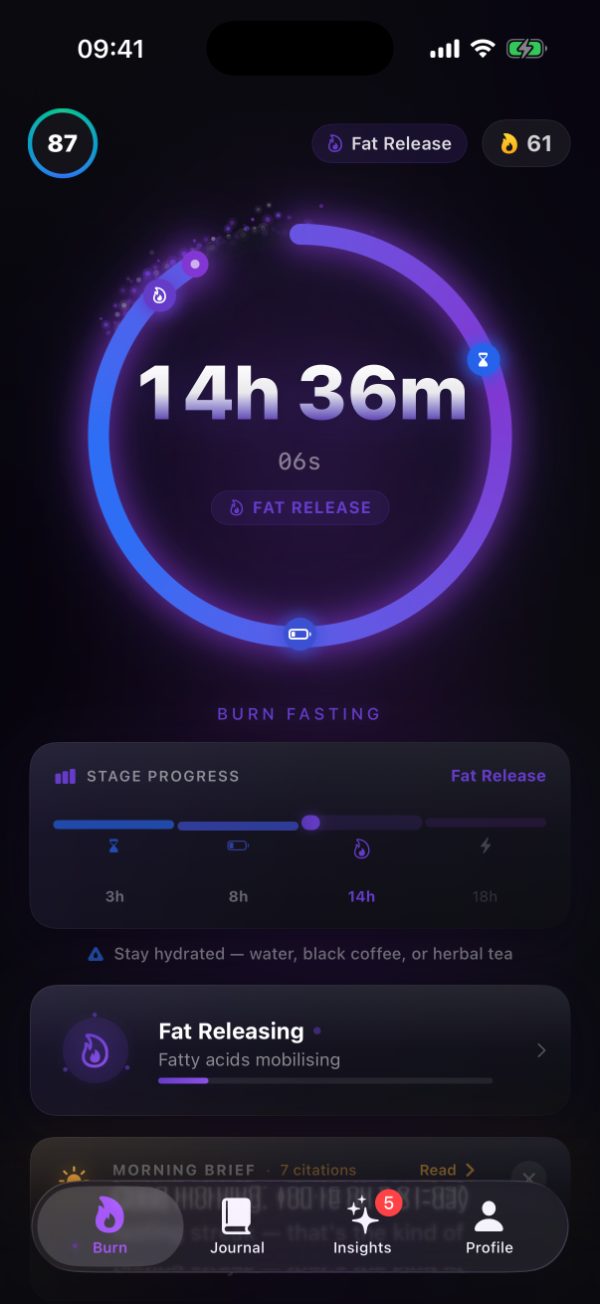
Burn keeps hours per week and completion rate as charts, so a month of consistency is visible in a way a single long fast never is.
Burn tracks every fast, names each stage you reach, and keeps the history that shows which weeks held.
Download free on the App StoreiPhone, iPad, and Apple Watch. Requires iOS 18 or watchOS 11.