 Burn
Get Burn
Burn
Get Burn
Burn
Get Burn
Burn
Get Burn
HOME / FASTING / OPEN-ENDED FASTING
Start the clock with no target and decide when to stop. Burn names each stage as you reach it, and there is no goal to fall short of.
The right mode when you want to see how the day goes rather than commit to a number in advance.
What changes
An open-ended fast is timed, staged and recorded exactly like any other. The only thing missing is the number you were aiming at.
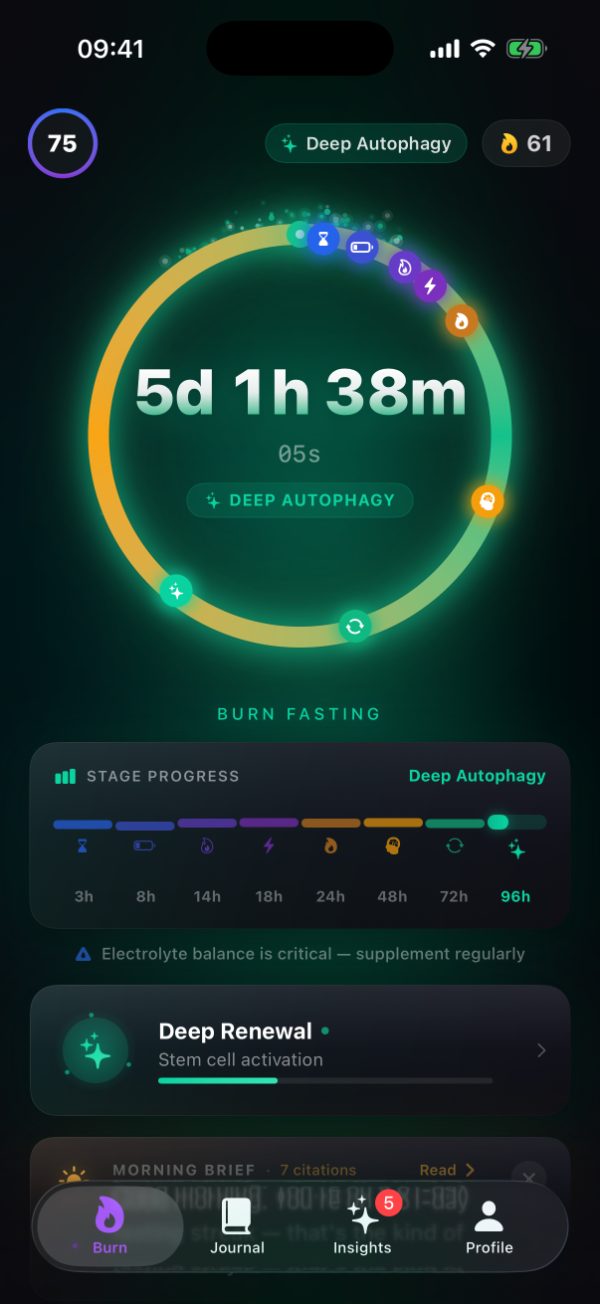
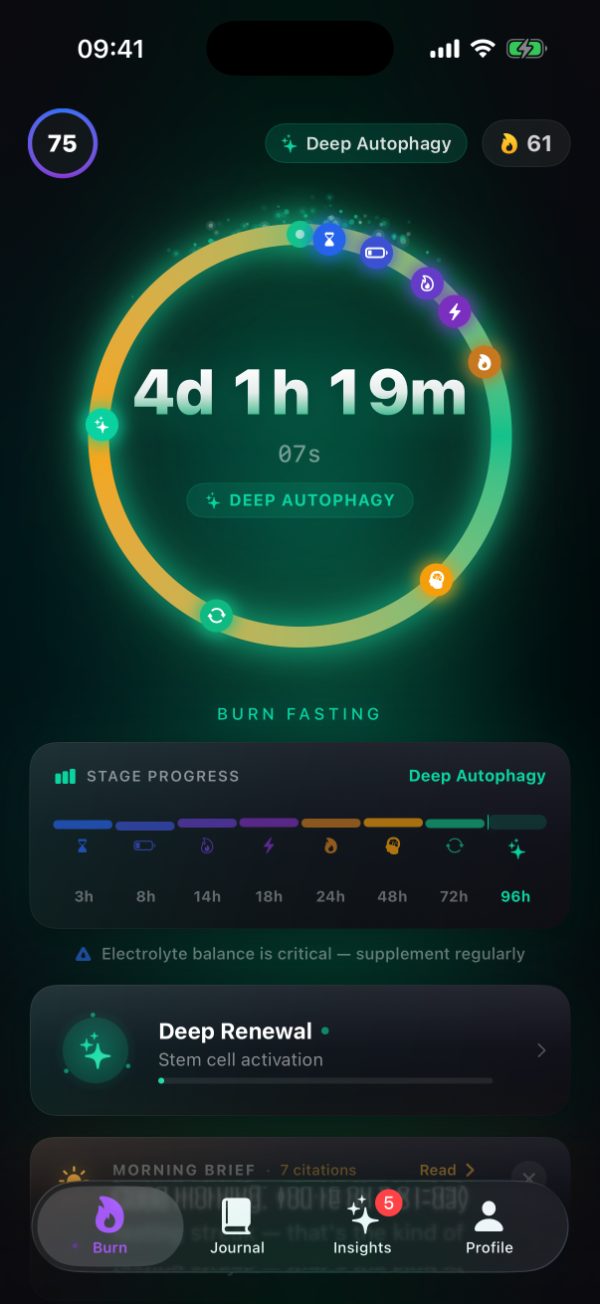
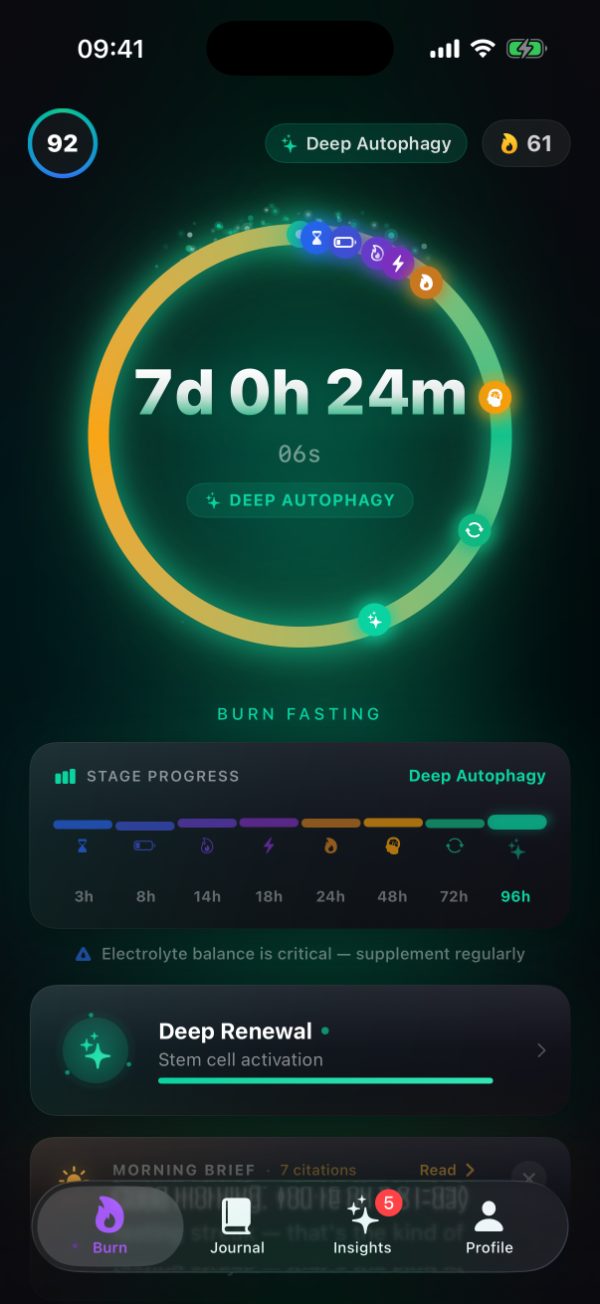
Each of the nine is named as the clock reaches it, with a buzz on your wrist at every boundary. The ring fills stage by stage rather than toward a goal.
With no goal set, stopping at fifteen hours is a fifteen hour fast rather than a missed sixteen. The record shows the stage you reached.
Completions, streaks and twelve personal records all include open-ended fasts. Your history does not treat them as a separate category.
When it is the better mode
A first 24 or 36 hour attempt is easier without a number attached. Run it open-ended, watch the stages arrive, and stop when you decide to rather than when you promised to.
Travel, a shifting work day, plans that might move. Setting 18:6 and then eating at hour fourteen because dinner came early records a shortfall that was never really one.
If a target has started to feel like a test you keep failing, running without one for a week takes the pressure out while keeping the habit and the record intact.
The reverse also holds. If you find yourself stopping earlier than you meant to, a target is the thing that keeps you honest.
Open the start sheet, pick the open-ended plan, and set your start time. From there the timer counts up with no end point, and you end the fast whenever you eat.
How Burn works →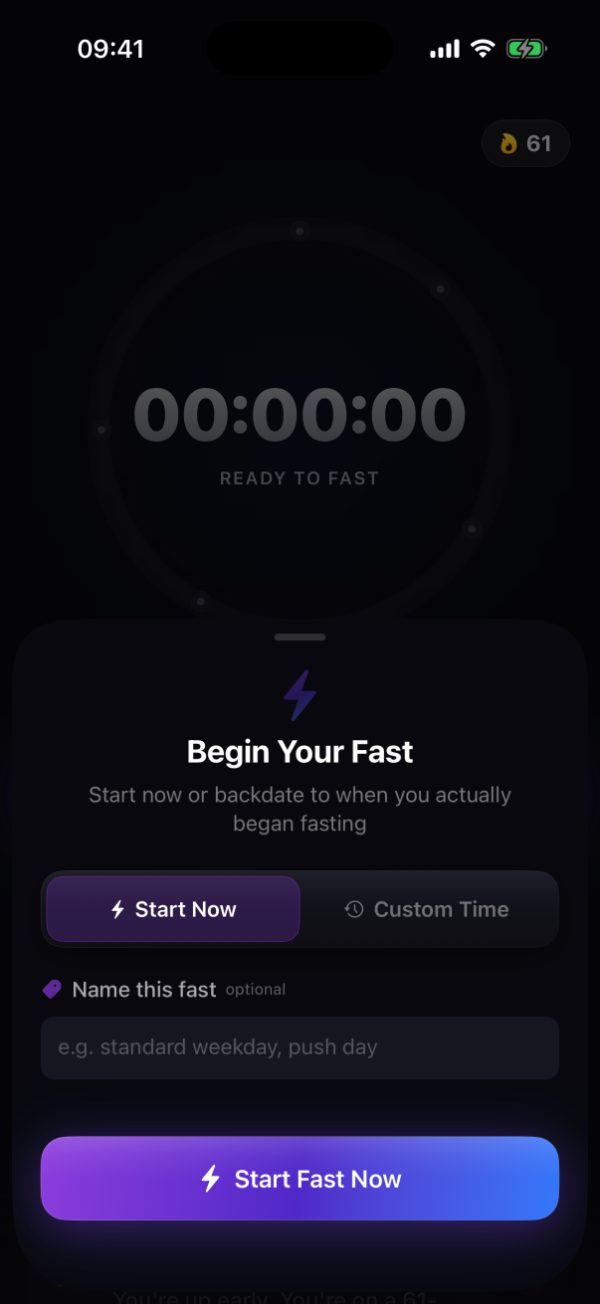
Where open-ended fasts go
A daily schedule has an obvious end. An extended fast often does not, which is the situation this mode is built for.
48h
Two days in, and the point at which how you break the fast starts to matter as much as the fast itself.
72h
Three days. Fasts of this length should be planned with a doctor, including how you come out of them.
96h
Four days and beyond, the stage all three captures above sit in. Burn shows an electrolyte warning throughout.
Open-ended does not mean unplanned. A fast that runs into days needs medical supervision, electrolytes and a considered refeed regardless of whether you named a target when you started it.
OPEN-ENDED
Best when the length is genuinely undecided, or when you are going further than you have before and would rather not commit in advance.
You still get every stage, every notification, and a full record.
A SET SCHEDULE
Best when the point is repetition: the same window every day, a streak to keep, and a number that makes hour fourteen non-negotiable.
Nine built-in schedules, plus three custom protocols of your own.
Stop and eat if you feel unwell, whatever the timer shows. Dizziness that does not settle, heart palpitations or shaking are a different signal from ordinary hunger, and worth raising with a doctor if they repeat.
Speak to your doctor before starting if you are pregnant or breastfeeding, have a history of eating disorders, manage diabetes, take medication timed to meals, or are under 18. Burn maps elapsed time to named stages and does not measure ketosis, autophagy, or metabolic state.
Every stage named as you reach it, every fast recorded, and no target to fall short of.
Download free on the App StoreiPhone, iPad, and Apple Watch. Requires iOS 18 or watchOS 11.