 Burn
Get Burn
Burn
Get Burn
Burn
Get Burn
Burn
Get Burn
HOME / GUIDES / REFEEDING AFTER A LONG FAST
After 24 hours or more, how you come out of a fast matters as much as the fast itself. The first meal decides whether the next few hours are comfortable.
This page covers extended fasts. For a 16:8 or an 18:6, the shorter version is in breaking a fast properly.
READ THIS FIRST
Refeeding syndrome is a serious electrolyte disturbance that can occur when someone who has been severely undernourished starts eating again. It is managed in a clinical setting, and it is not a risk you assess yourself.
If you are fasting for several days, have a history of eating disorders, are underweight, or manage a medical condition, speak to a doctor before starting and before breaking the fast. Everything below is about comfort on a fast of one to three days, not treatment for anything.
Read the safety guidance →The sequence
Your digestion has been idle for a day or more. Give it something small to restart on before asking it to handle a full meal.
The longer the fast, the more the early steps matter. After 72 hours, spread the sequence over most of a day rather than three hours.
What to avoid first
Asking idle digestion for a full dinner is the least comfortable way to break a long fast. Bloating, cramping and a heavy crash are the usual result.
After a long fast, insulin sensitivity is high. A large sugary first meal tends to produce a sharp rise and an unpleasant drop an hour later.
On an empty stomach after 24 hours or more, the effect is stronger than usual. Leave it until you have eaten properly.

Longer fasts
A 24 hour fast and a three day fast are different situations, and the second one deserves more care and a conversation with your doctor.
24h
Broth is optional here. Start with something modest, wait twenty minutes, and eat normally after that.
48h
Broth, then a small protein meal, then a normal one later. Electrolytes matter more here than the food does.
72h+
Fasts of three days or more should be planned with a doctor, including how you break them. Spread refeeding across a day rather than an afternoon.
Burn's timer runs as long as you want it to, including flexible fasts with no set end. What the app does not do is decide whether a given length is appropriate for you.
In the app
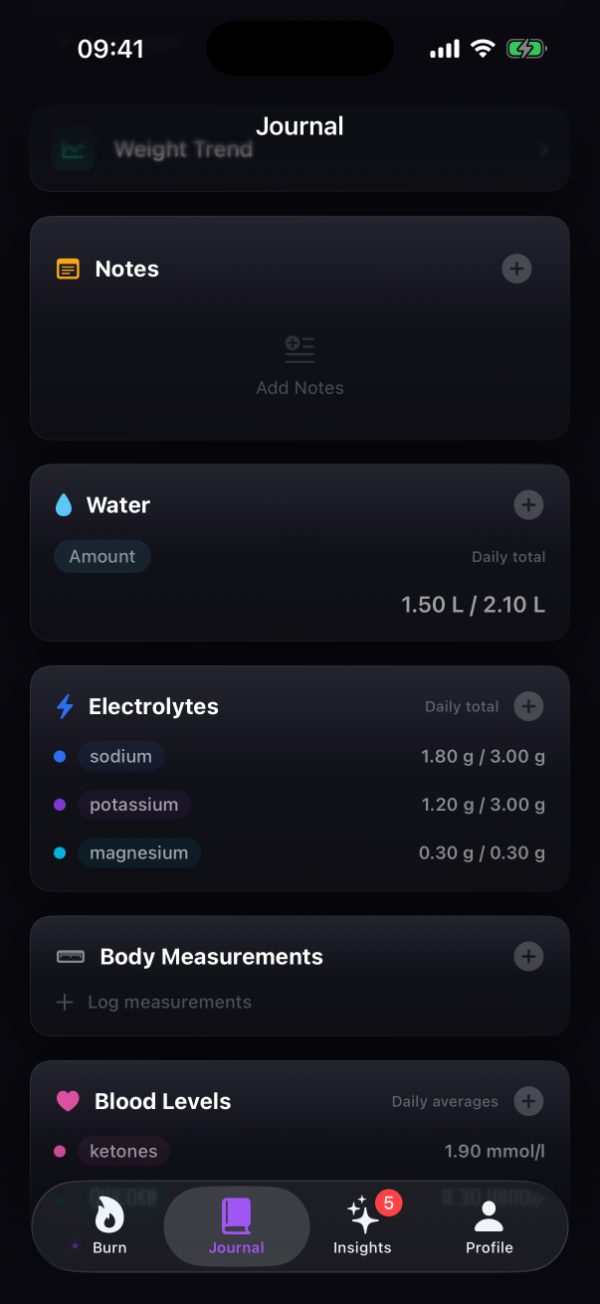
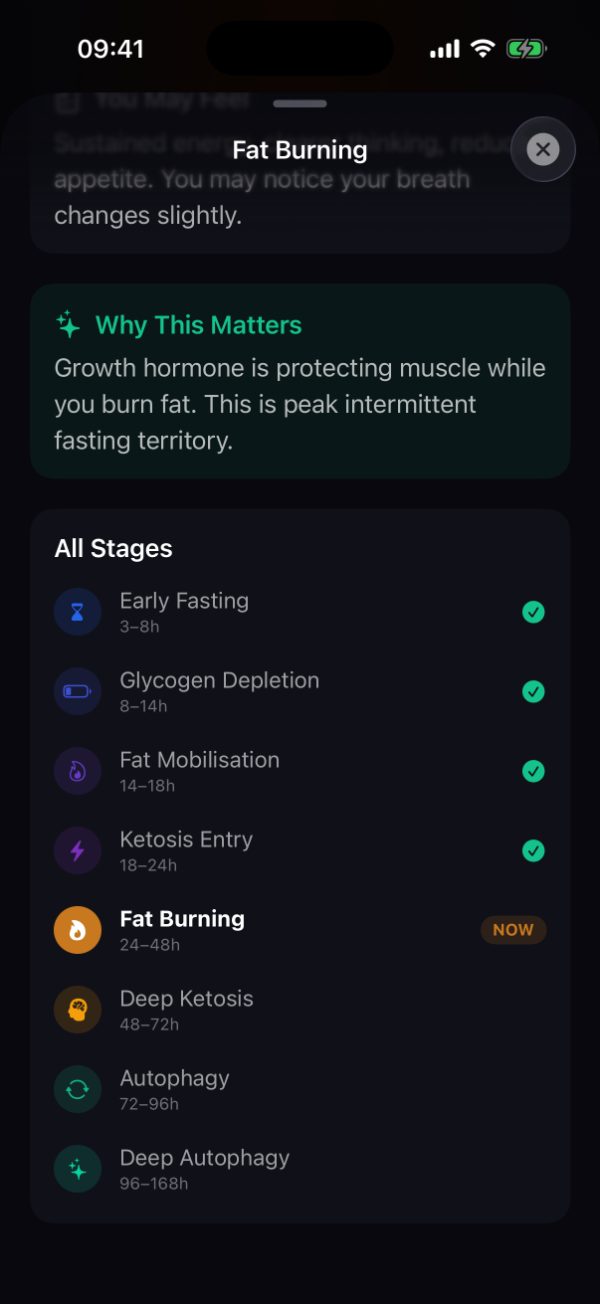
An extended fast passes through stages a 16:8 never reaches, and the record afterwards is worth having. Burn logs the duration, the furthest stage, and the water and minerals you took in along the way.
Fat Burning at 24 hours, and the deeper stages beyond it, each with a buzz on your wrist at the boundary.
On a fast this long, hydration is the thing to watch. The Journal keeps it next to the fast rather than somewhere else.
Refeeding syndrome is a well described clinical condition in severely undernourished patients, and its management is documented in the medical literature. Insulin sensitivity increasing after an extended fast is also established. Claims here are drawn from peer-reviewed research and traced in our evidence policy.
Burn is a fasting timer that names the stage the clock has reached. It does not diagnose or treat anything, it does not measure ketosis, autophagy, or metabolic state, and nothing on this page replaces advice from your own doctor.
Burn names all nine stages as you reach them and keeps the water and minerals beside the fast.
Download free on the App StoreiPhone, iPad, and Apple Watch. Requires iOS 18 or watchOS 11.