HOME / GUIDES / FEELING COLD WHILE FASTING
Cold hands and feet during a fast are common and usually harmless. Digestion generates heat, so with no food coming in there is less of it, and your body prioritizes your core.
Two causes, three quick fixes, and the one version of cold that is worth stopping for.
Why it happens
One is about heat production. The other is about where your blood is.
CAUSE ONE
Processing a meal takes energy and releases warmth as a by-product. It is part of why you feel warm after eating. Fasting removes that source of heat for the length of the fast.
This is also why the feeling is strongest at the hours you would normally be eating, rather than building steadily through the fast.
CAUSE TWO
Blood flow to the skin and extremities reduces to keep your core temperature steady. Hands and feet go cold first because they are furthest from the middle.
Fluid loss compounds it. Lower insulin during a fast means your kidneys release sodium and water, and less circulating fluid means less heat moved out to the edges.
Neither is a sign that your metabolism has slowed down or that fasting is damaging you. Feeling cold is a normal response to not eating, and it passes when you eat.
What helps
Start with the warm drink. It works on both causes at once.
Black coffee, plain tea, or hot water. It adds warmth directly and adds fluid, and none of it ends the fast. Herbal tea in the evening if caffeine is a problem.
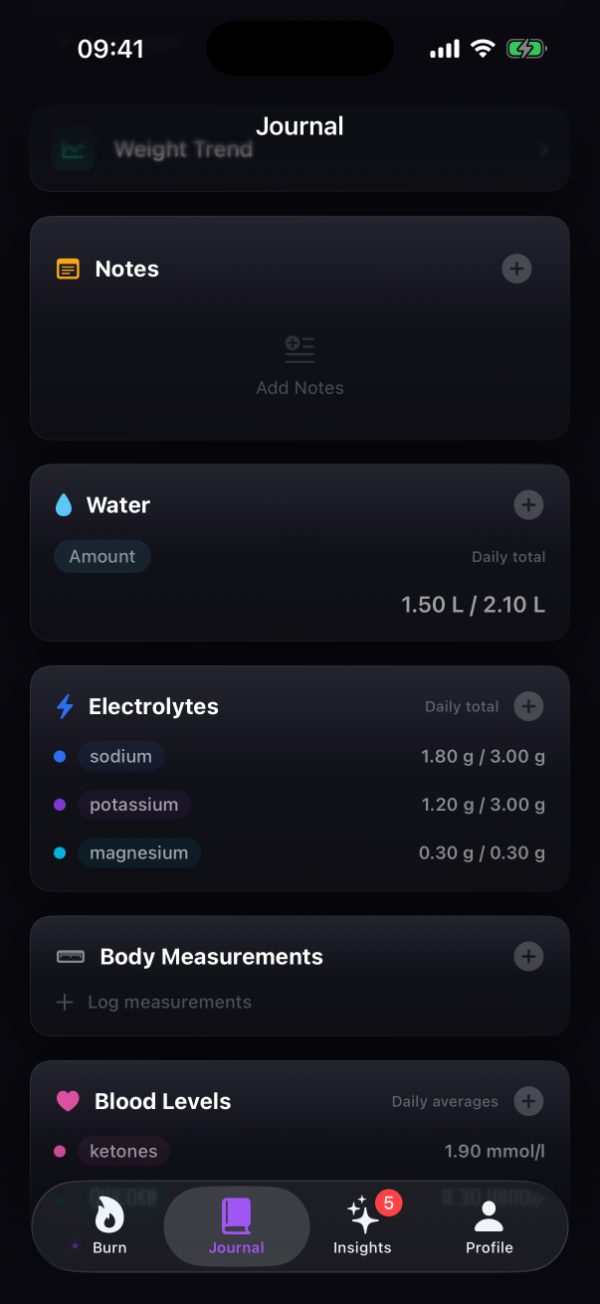
If you have been drinking plain water all morning, sodium is likely low. A pinch of salt helps your body hold onto fluid rather than passing it straight through.
A short walk generates heat and pushes blood back out to your hands. A sweater is not a workaround, it is the answer for a fast you are otherwise handling well.
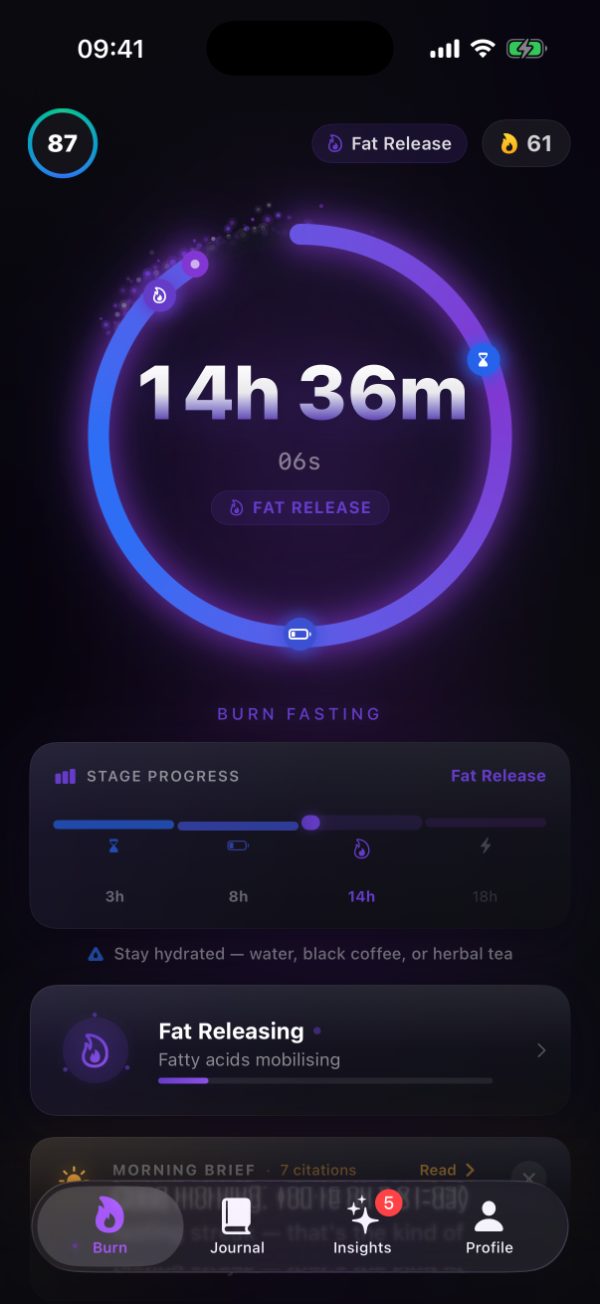
Burn's Struggle Support keeps a hydration prompt and a symptom check one tap from the timer, so the fix is available in the moment rather than after you have looked it up.
Longer fasts
On a 16:8 the effect is usually cold hands and little else. On a fast that runs into Fat Burning and beyond, the effect is stronger and lasts longer, because you have gone a full day without the heat that comes with eating.
Warm layers, hot drinks through the day, and electrolytes rather than plain water alone. Extended fasting raises the importance of hydration.
Being cold is uncomfortable, and discomfort is what ends fasts early. Warmth is one of the cheapest ways to finish the one you started.
WHEN TO STOP
Stop and eat if you start shivering, if the cold comes with dizziness that does not settle, or if you feel confused or unsteady. That is a different signal from cool hands, and it is worth raising with a doctor if it repeats.
Persistent cold intolerance outside your fasts also deserves a conversation with your doctor, since thyroid function and iron levels affect it and neither is something a fasting timer can see.
Read the safety guidance →That digestion produces heat and that blood flow to the extremities reduces to protect core temperature are both well described. The link between lower insulin, sodium excretion and fluid loss during fasting is established. Claims here are drawn from peer-reviewed research and traced in our evidence policy.
Burn records what you log and names the stage the clock has reached. It does not measure your temperature, your electrolyte status, ketosis, autophagy, or metabolic state.
Burn keeps a hydration prompt, a symptom check and four more tools one tap from the timer.
Download free on the App StoreiPhone, iPad, and Apple Watch. Requires iOS 18 or watchOS 11.