 Burn
Get Burn
Burn
Get Burn
Burn
Get Burn
Burn
Get Burn
HOME / GUIDES / HOW MUCH WATER WHILE FASTING
More than usual, because you normally get a meaningful amount of your fluid from food. But water alone is not the answer, and drinking a great deal of it can make you feel worse.
What changes during a fast, how to judge your own intake, and why salt belongs in the conversation.
Why fasting changes it
One is what you stop taking in. The other is what your body starts letting go of.
REASON ONE
Fruit, vegetables, soup, yogurt and even bread carry water, and on a normal day a real share of your intake arrives with meals rather than from a glass.
Skip those meals and that share disappears. Drinking the same amount you always did leaves you short without anything obvious having changed.
REASON TWO
Insulin falls during a fast, and lower insulin tells the kidneys to let sodium and water go. The extra trips to the bathroom are this, and so is a chunk of early weight on the scale.
You are losing water and salt together, which is the detail that decides what you should drink.
The mistake worth avoiding
This is the part that surprises people. If you are already losing sodium and you drink a large volume of plain water, you dilute what is left. The headache and the fatigue can get stronger, not weaker, and the natural response is to drink even more.
Steady sips beat a liter in one go. Drinking a large volume quickly mostly passes straight through and takes sodium with it.
A pinch of salt in your water, or a cup of broth, helps you hold onto what you drink. Neither breaks a fast.
Black coffee and plain tea are mostly water and contribute to your intake. They also make a long fast easier, and neither ends it.
If you have been drinking plenty and still feel rough, more water is unlikely to be the answer. Salt is the next thing to try. Electrolytes while fasting covers all three minerals.
Judging your own intake
Fluid needs shift with your body size, the heat, your training, and how long you are fasting. Rather than a target from the internet, read what your body is telling you.
For a fast of 24 hours or less, thirst covers what you need. It is a more useful signal than a fixed quota you are trying to hit.
Dark urine suggests you are behind. Completely clear suggests you are drinking more than you need, which is the moment to add salt rather than more water.
A hot day or a hard session means more fluid and more sodium. A fasted walk in the cold means very little extra.
Anyone managing blood pressure, kidney function, or heart medication should talk to a doctor before changing fluid or salt intake. That is a conversation for you and your doctor, not a number a fasting app should hand you.
Read the safety guidance →In the app
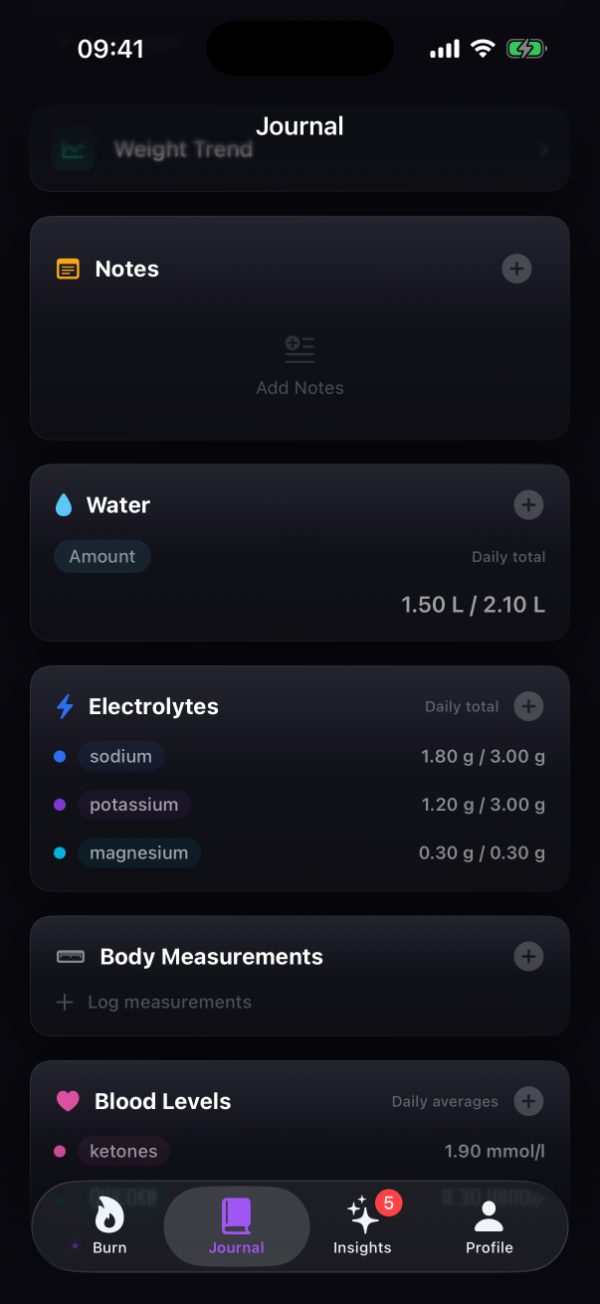
Burn's Journal tracks water against a daily figure you choose rather than one it invents for you, and holds sodium, potassium and magnesium beside it. Hydration also feeds your Body Score, so a week of poor intake shows up rather than being forgotten.
Adaptive hydration prompts, rate-limited and aware of your quiet hours, so they arrive when they are useful.
Struggle Support keeps a hydration prompt and a symptom check available in the moment, not after you have gone looking for them.

That food contributes to daily fluid intake, and that lower insulin during a fast increases sodium and water excretion, are both well described. Claims here are drawn from peer-reviewed research and traced in our evidence policy.
Burn logs the water and minerals you enter and names the stage the clock has reached. It does not measure your hydration status, your electrolyte levels, ketosis, autophagy, or metabolic state.
Burn tracks water against your own target with reminders through the fasting hours.
Download free on the App StoreiPhone, iPad, and Apple Watch. Requires iOS 18 or watchOS 11.